Top AI Skills for Singapore Professionals in 2026: A Career Growth Guide
As the landscape of the global workforce undergoes a seismic shift, the importance of staying ahead in the technological race has never been more pronounced, particularly within the competitive market of Singapore. By 2026, the rise of advanced automation and machine learning has redefined the professional requirements across all sectors. Finding talent has become significantly difficult for local firms, as AI skills in demand Singapore have transitioned from being a niche advantage to a baseline necessity for career longevity. Industry experts emphasize that the current labor market is not just looking for candidates who can use software; they are searching for professionals who understand the underlying logic of artificial intelligence and its practical application. This guide explores the essential competencies required to remain relevant in this evolving climate. Whether you are working in finance, healthcare, or logistics, understanding how to harness the power of AI is no longer optional. By focusing on literacy, model deployment, and ethical implementation, you can future-proof your career and secure your position in the vibrant digital economy of Singapore, ensuring that your skills align with the fast-moving goals of modern enterprises.
Table of Contents
The Foundation of AI Literacy
AI literacy is the cornerstone of professional survival in the mid-2020s. For professionals in Singapore, this means moving beyond simple prompt engineering and developing a deep understanding of how neural networks function at a conceptual level. Literacy involves knowing which tools are appropriate for specific tasks and identifying the limitations of large language models. Professionals who can successfully translate business problems into AI-ready requirements are becoming the most highly compensated members of their teams. This skill set is essential because it bridges the communication gap between technical developers and non-technical stakeholders, allowing for smoother project integration. Furthermore, foundational knowledge enables workers to evaluate AI outputs for hallucinations or inaccuracies, a critical requirement as businesses rely more on autonomous data synthesis. As organizations invest heavily in internal training, employees who demonstrate a proactive interest in these foundational concepts often find themselves prioritized for promotions and specialized task forces. This intellectual foundation is not just about writing code; it is about cultivating an analytical mindset that views machine intelligence as a collaborative tool rather than a replacement. By mastering the fundamental terminology and operational logic of AI systems, you position yourself as a translator who can unlock the potential of digital transformation in any department. In a city-state where innovation is the primary economic driver, having the ability to explain AI concepts to leadership is an incredibly rare and valuable asset that commands significant respect. Companies are actively seeking individuals who can curate the right toolkits for their specific organizational needs while maintaining a high standard of data integrity and security throughout the workflow, ensuring that every technological deployment is both safe and highly efficient.
Model Deployment and Optimization
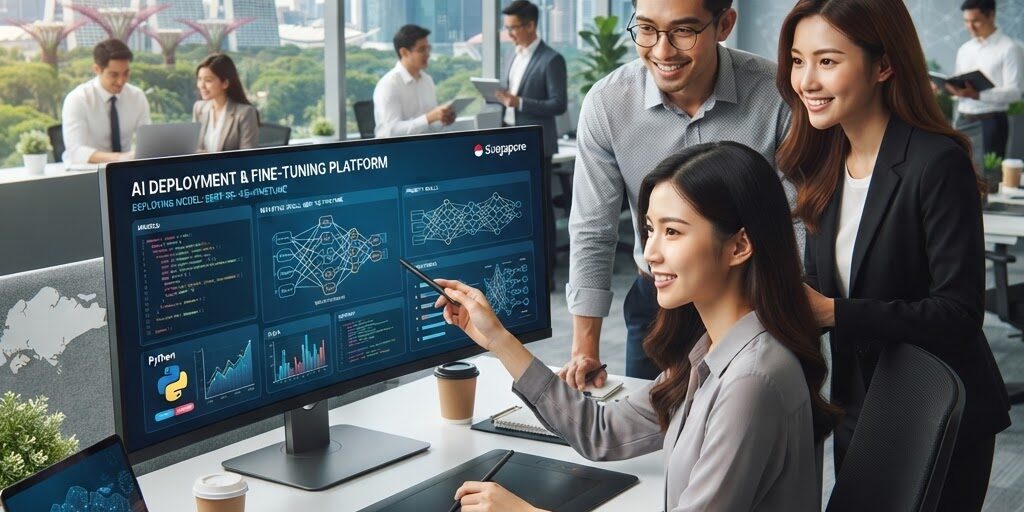
Once you have achieved a high level of literacy, the next logical step is learning how to deploy and fine-tune AI models. In 2026, Singaporean companies are moving away from off-the-shelf solutions and shifting toward custom-tuned models that are trained on proprietary datasets. This shift necessitates a workforce that understands the intricacies of model fine-tuning, parameter adjustment, and environment configuration. Fine-tuning is the process of taking a pre-trained model and refining its performance for a specific vertical, such as banking compliance or medical diagnostics. This process requires a sophisticated understanding of data cleaning, feature engineering, and performance metrics. When you can take a generic model and make it perform at an elite level for your firm, you transition from a user to a builder. This skill is vital because it reduces reliance on expensive external consultants and fosters internal innovation cycles. Optimization is equally critical; it involves maximizing the efficiency of the model to reduce latency and infrastructure costs. Many firms in the region are currently seeking professionals who can optimize these complex algorithms to run on edge devices or secure private cloud environments. The following table highlights the core technical areas where proficiency is currently required for high-level roles in the Singaporean technology sector. By mastering these specific technical pathways, you will be well-equipped to handle the challenges of modern engineering and system maintenance. These skills are often the deciding factor in hiring decisions, as they demonstrate a candidate’s ability to drive tangible, measurable results for the enterprise while effectively managing hardware and software resources to maintain a competitive advantage in a fast-paced environment where efficiency and speed are the primary metrics for success and growth.
| Skill Category | Application | Importance |
|---|---|---|
| Fine-Tuning | Domain adaptation | High |
| Model Optimization | Latency reduction | High |
| Edge Computing | Local AI processing | Medium |
| API Integration | System connectivity | Critical |
Data Stewardship and AI Ethics
With the widespread adoption of AI, the responsibility of data stewardship has become a primary pillar of corporate governance. In Singapore, where data privacy regulations like the PDPA are strictly enforced, professionals who can manage AI systems while maintaining compliance are in incredibly short supply. Data stewardship involves more than just keeping data safe; it involves understanding the provenance of the information used to train models, ensuring that the training sets are free from significant bias, and auditing the outputs for ethical considerations. Professionals must now act as the moral compass of the algorithm, identifying potential pitfalls such as discriminatory outcomes or privacy breaches before they reach the production stage. Ethical AI implementation is not just a regulatory requirement; it is a brand-building asset that fosters trust with clients and customers. As AI becomes embedded in hiring, lending, and social services, the risk of reputational damage due to algorithmic failure increases. Therefore, workers who can implement rigorous testing frameworks and validation protocols are highly sought after by leadership teams. This role requires a blend of legal awareness, technical rigor, and critical thinking. It is about understanding the impact of automation on individuals and the broader community. By taking ownership of data lineage and maintaining transparency in how AI models make decisions, you become a guardian of the company’s integrity. Industry experts predict that the demand for AI auditors and ethics officers will continue to grow as government frameworks expand to encompass more sectors. Professionals who specialize in these areas effectively protect the firm from legal exposure while ensuring that all AI applications serve to enhance, rather than undermine, the public interest, which is vital for long-term sustainability in the regional market.
Strategic Implementation in Business
The final and most comprehensive skill set involves the strategic implementation of AI into business workflows to generate measurable value. It is one thing to know how to use a tool, but it is entirely another to know when and where to deploy it for maximum organizational impact. Professionals in Singapore are increasingly tasked with analyzing existing business processes, identifying bottlenecks, and determining where machine intelligence can replace or augment human effort. This involves a high degree of business acumen and a solid grasp of cost-benefit analysis. A successful strategic implementation leader considers the impact of AI on the workforce, the training requirements for staff, and the long-term ROI of the technology. They understand that AI is not a magic solution to every problem and often advise against using it when simpler automation suffices. By developing a strategic roadmap for AI, you align your technical knowledge with the overarching business objectives of your organization. This approach ensures that investments in technology translate into higher productivity, improved customer experiences, and increased revenue. In 2026, the most effective managers are those who can lead cross-functional teams in a hybrid environment, balancing the speed of AI-driven development with the need for stable, reliable operations. Strategic foresight also includes anticipating future shifts in the regulatory or technological environment and preparing the organization for those changes. This is the ultimate career progression for those who started as technicians but have grown into leaders who can influence corporate direction. By demonstrating that your AI knowledge is rooted in business strategy, you elevate your profile from an individual contributor to a vital part of the company’s future success, ensuring your role remains central to the organization’s growth and competitive performance in the global market.
To wrap up this career guide, it is clear that the path to success in 2026 is paved with a commitment to continuous learning and technical mastery. As the demand for sophisticated AI talent continues to outpace supply in Singapore, your ability to adapt to new methodologies will determine your trajectory. By focusing on literacy, technical implementation, data ethics, and business strategy, you are not merely adding skills to your resume; you are transforming how you contribute to your organization. The shift toward an AI-integrated economy is permanent, and those who embrace this change with curiosity and rigor will find endless opportunities for growth. Stay informed, remain ethical in your practices, and always seek to bridge the gap between technical potential and human impact as you navigate your professional future.
Frequently Asked Questions
What are the most critical AI skills for job seekers in Singapore?
The most important skills include AI literacy, model fine-tuning, ethical data stewardship, and the ability to integrate AI into existing business processes.
How can professionals start learning these skills?
Start by identifying your current technical gap and taking certification courses focused on machine learning fundamentals and real-world application, while engaging with local industry communities.
Is coding a requirement for all AI-related roles?
While coding is a major asset, many strategic and analytical AI roles focus on architecture, ethics, and process design, which may not require deep programming expertise.
How do I stay updated with the fast-changing AI landscape?
Follow reputable technical publications, attend regional technology summits, and join professional network groups that focus on current trends in AI policy and development.
Does AI replace the need for traditional IT skills?
AI complements traditional IT skills by automating mundane tasks, allowing professionals to focus on high-level architecture, complex problem-solving, and system-wide innovation strategies.