Agentic AI and RAG: The Most In-Demand Skills for 2026
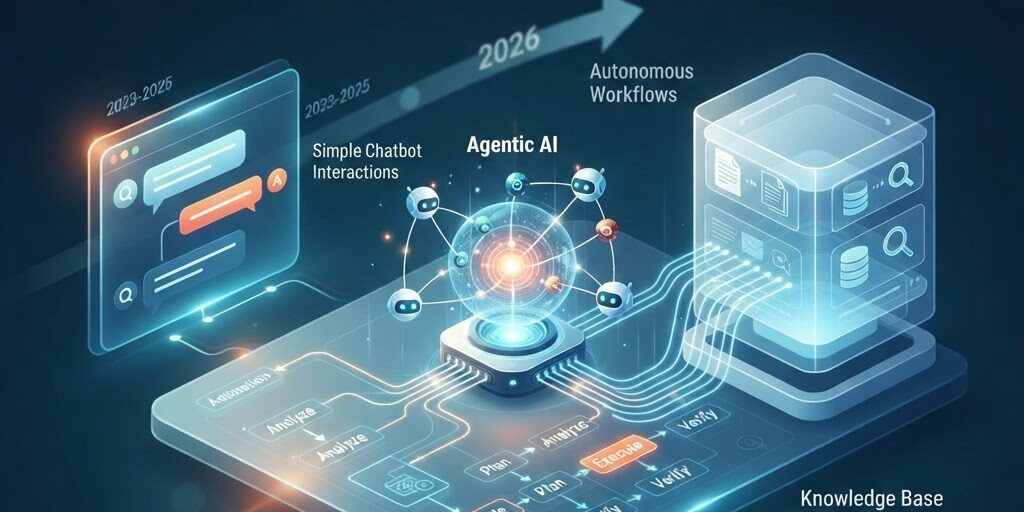
The landscape of artificial intelligence is evolving rapidly, moving beyond basic chatbot interactions toward highly sophisticated, autonomous systems. As we look toward the technical requirements of 2026, professionals must prioritize Agentic AI training to remain competitive. Organizations are shifting their focus from simple, text-based queries to complex, multi-step workflows executed by autonomous agents. These systems rely heavily on Retrieval-Augmented Generation, or RAG, to provide accurate, context-aware information. Mastering these technologies is no longer optional for developers, data engineers, or architects; it is a fundamental necessity for anyone seeking to build the next generation of digital infrastructure. This comprehensive guide explores the intersection of agentic workflows and information retrieval, highlighting why structured learning paths are essential. By understanding the core mechanics of how agents operate and how RAG bridges the gap between static data and dynamic action, you position yourself at the forefront of the technological revolution. Whether you are scaling internal operations or building consumer-facing products, the synergy between autonomous agency and high-fidelity data retrieval is the defining technical skill set of our time.
Table of Contents
Understanding Agentic AI Architectures
Agentic AI represents a fundamental shift in how software interacts with the world. Unlike traditional programs that follow rigid, pre-defined pathways, agentic systems possess the ability to reason, plan, and execute multi-step tasks to achieve a specific goal. This requires deep exposure to Agentic AI training, where engineers learn to construct systems that can evaluate a situation, select the appropriate tools, and adjust their strategy based on real-time feedback loops. These agents operate as autonomous units, capable of interacting with APIs, querying databases, and synthesizing information without constant human intervention. The complexity lies in defining the boundary between autonomy and control. Professionals must understand how to implement guardrails that prevent agents from drifting off-target while still allowing them the flexibility to handle unexpected edge cases. When designing these systems, architects often focus on iterative planning cycles where the model reflects on its previous actions, critiques its own performance, and updates its plan accordingly. This reflexive architecture is what separates a standard LLM implementation from a truly robust, agentic system. As these agents become more prevalent, the demand for individuals capable of designing, debugging, and managing their lifecycles will skyrocket. The industry is currently seeking experts who can bridge the gap between abstract AI logic and concrete execution in enterprise environments. By focusing on the underlying frameworks like state machines, persistent memory, and tool-use protocols, developers can ensure that their agents are not just impressive demos, but reliable engines for productivity. The goal is to build agents that are trustworthy, scalable, and capable of operating within the complex, messy realities of modern digital work environments where data sources are diverse and often unstructured.
Mastering Retrieval-Augmented Generation
Retrieval-Augmented Generation, or RAG, is the backbone of accurate information delivery in modern AI systems. By connecting large language models to external, domain-specific data, RAG allows for contextually rich responses that mitigate the risk of hallucination. Mastering RAG requires more than just connecting a database to a model; it involves advanced techniques like semantic search, vector storage, and reranking mechanisms that ensure the most relevant chunks of information are provided as context. Industry experts agree that the quality of the retrieved data directly dictates the quality of the output. In the context of Agentic AI training, RAG serves as the primary mechanism through which an agent acquires the knowledge necessary to perform its assigned tasks effectively. Without a well-optimized RAG pipeline, an agent is effectively blind, relying only on its pre-trained knowledge which may be stale or irrelevant to the specific business context at hand. Implementing a robust RAG architecture involves several critical steps, including efficient data chunking strategies, choosing the right embedding models, and establishing robust vector indexing practices. Professionals must learn how to handle multi-modal data, ensuring that images, PDF reports, and database records are all correctly ingested and retrievable. The integration of these elements into a seamless pipeline is a highly sought-after skill. The following table compares traditional search methods with advanced RAG implementations to illustrate the performance benefits currently driving industry adoption. By mastering these nuances, developers can build systems that don’t just talk, but actually understand and utilize proprietary company data to drive meaningful action.
| Feature | Traditional Search | Advanced RAG |
|---|---|---|
| Data Context | Static Keywords | Semantic & Dynamic |
| Accuracy | Moderate | High (Context-Aware) |
| Hallucinations | Common | Significantly Reduced |
| Source Citations | Rare | Standard Integration |
The Future of Autonomous Workflows
The move toward autonomous workflows is perhaps the most significant change in organizational structure in recent years. By automating complex, end-to-end tasks, companies are transforming how they handle everything from customer service and supply chain management to software testing and quality control. These workflows are not merely scripts; they are dynamic processes orchestrated by intelligent agents capable of navigating ambiguity. During Agentic AI training, participants learn how to break down high-level business objectives into sub-tasks that an agent can decompose and solve. This involves designing intricate multi-agent systems where different agents have specialized roles, such as researchers, planners, executors, and quality reviewers. For example, in an e-commerce setting, a primary agent might trigger a series of specialized sub-agents to verify inventory, process payments, and update shipping logs, all while maintaining a consistent state across the entire session. The challenge for developers lies in managing the state of these long-running processes. If an agent fails mid-task, the system must be resilient enough to recover, provide feedback, or escalate to a human operator. Furthermore, these autonomous workflows require strict auditability. Organizations need to track every decision made by an agent to ensure compliance with industry regulations and internal security policies. As we move deeper into 2026, the successful deployment of these workflows will depend on the ability to balance speed with safety. Experts recognize that the most effective AI implementations are those that augment human decision-making rather than replacing it entirely. By training systems to handle the repetitive, high-volume, and data-intensive portions of a workflow, humans can shift their focus toward high-level strategy and creative problem-solving, creating a more efficient and capable organizational structure.
Essential Career Pathways in AI
The professional landscape for artificial intelligence is bifurcating into two distinct paths: those who focus on fundamental model research and those who specialize in the application, integration, and orchestration of AI agents. The latter category, which focuses on applied agentic systems, is currently witnessing the highest demand in the job market. To prepare for a career in this sector, professionals should seek comprehensive Agentic AI training that combines theoretical grounding with hands-on project work. Developing a portfolio of functional agents—whether they are research assistants, automated code auditors, or personalized data analysts—will be the most effective way to demonstrate competency to potential employers. Furthermore, the ability to communicate technical trade-offs to non-technical stakeholders is becoming a critical soft skill. As organizations rush to integrate these technologies, they need translators who can explain why certain RAG architectures are superior for their specific use cases or why an agentic approach is more efficient than a traditional automation script. Networking with communities focused on open-source frameworks for agent orchestration is also vital. By staying active in these technical circles, practitioners can stay updated on the latest patterns and anti-patterns emerging in the industry. The future belongs to those who view AI not as a static tool, but as a dynamic component of their problem-solving toolkit. Whether you are an existing software engineer looking to pivot or a business analyst aiming to upskill, the key is to adopt a mindset of continuous experimentation. The rapid pace of change means that your toolkit will need constant updating. By focusing on the fundamental principles of agent architecture and data retrieval, you ensure that your skills remain relevant regardless of how the underlying model technology changes over the next few years.
Conclusion
As we transition into 2026, the importance of Agentic AI and RAG systems cannot be overstated. These technologies are fundamentally changing how organizations operate, moving from passive data storage to active, autonomous execution. For professionals, investing in Agentic AI training is a direct investment in your future viability. By understanding the core mechanics of how to build, maintain, and optimize these systems, you enable yourself to create real-world impact. The road ahead involves navigating complex technical challenges, but the rewards for those who master this craft are immense. The shift is already happening; stay proactive, keep building, and continue to refine your understanding of this rapidly maturing field to ensure you remain an essential asset in the evolving digital economy of tomorrow.
Frequently Asked Questions
What is the core difference between RAG and standard AI models?
Standard models rely on training data, while RAG connects models to live, private data sources for accuracy.
Why is Agentic AI considered the next phase of innovation?
It enables systems to take autonomous actions rather than just generating text or responding to direct commands.
How can one start with Agentic AI training?
Begin by learning foundational programming, data retrieval patterns, and existing orchestration frameworks used for agent development.
What is the role of vector databases in RAG?
They store data embeddings, allowing models to perform fast, semantic lookups of relevant information in real time.
Will human oversight still be needed in 2026?
Yes, human oversight is essential for safety, ethical compliance, and managing complex decision-making in critical environments.