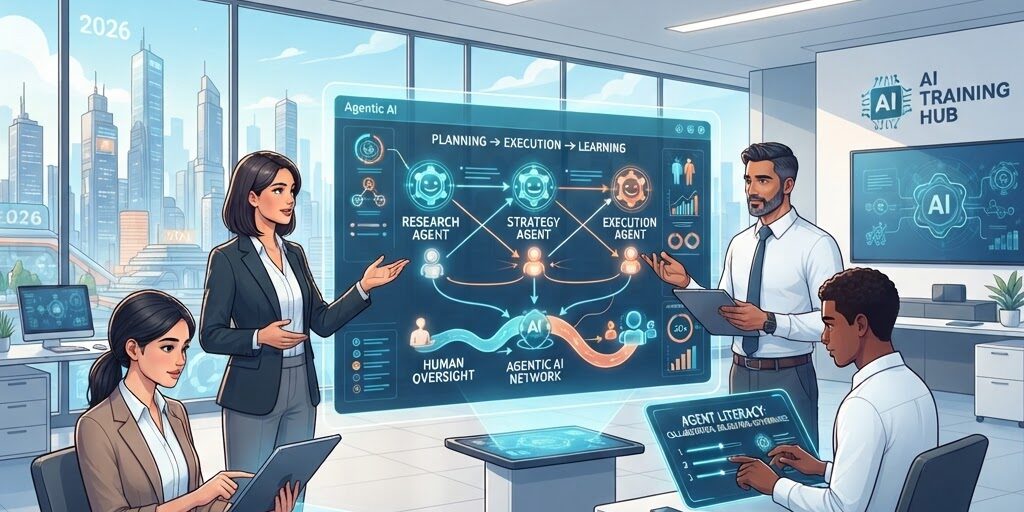
Mastering Agentic AI: The Essential Skills for the 2026 Workforce
As we step into the futuristic landscape of 2026, the emergence of Agentic AI represents a pivotal shift in the workforce dynamics. Unlike traditional generative AI tools, Agentic AI refers to autonomous systems capable of executing multi-step tasks without constant human intervention. To thrive in this environment, professionals must focus on developing AI literacy as a crucial skill set. This Agentic AI training involves understanding how to collaborate effectively with these sophisticated systems and leveraging them to enhance productivity and innovation. Embracing this change is not merely about adapting to technology; it’s about fostering a mindset that encourages continuous learning and adaptability. The workforce of 2026 will necessitate individuals who can not only interact with AI but can also augment their capabilities to drive strategic decisions. The coming sections will explore the essential skills required for mastering Agentic AI, offering insights that will empower professionals to excel in this new terrain.
Table of Contents
Understanding Agentic AI
At its core, Agentic AI encompasses systems that can operate autonomously in complex environments, making informed decisions based on data and situational awareness. This advanced form of AI represents a departure from traditional models, emphasizing its ability to learn and adapt in real-time. The significance of this technology lies in its potential to manage multifaceted tasks that require collaboration across various domains. Understanding Agentic AI begins with recognizing its underlying principles which include machine learning, natural language processing, and cognitive computing. These components enable AI to mimic human-like understanding and problem-solving abilities.
Professionals embarking on their Agentic AI training journey should first familiarize themselves with the fundamental concepts, including the differences between traditional AI systems and Agentic AI. This foundational knowledge allows individuals to appreciate the complexities and capabilities of these systems. Moreover, as Agentic AI continues to evolve, staying updated with the latest advancements in the field becomes paramount. Resources such as industry reports and academic publications can provide valuable insights into new trends, tools, and methodologies. Practical application of these concepts in real-world scenarios will further enhance understanding, bridging the gap between theory and practice.
Incorporating Agentic AI into organizations leads to improvements in productivity and efficiency. A recent study highlighted that companies using Agentic AI have seen a significant reduction in operational costs while increasing output quality. By analyzing data trends and predicting outcomes, Agentic AI systems enable smarter decision-making, thus positioning organizations for a competitive advantage. The demand for professionals equipped to work alongside these systems will undoubtedly rise, making it crucial for individuals to adapt and evolve in their roles. The future will reward those who embrace this changing landscape, demonstrating skills not only in technology but also in leadership and innovation.
| Components of Agentic AI | Description |
|---|---|
| Machine Learning | Algorithms that allow systems to learn from data and improve over time. |
| Natural Language Processing | Enables machines to understand and respond to human language. |
| Cognitive Computing | Mimics human thought processes in complex situations. |
Skills Required for Agentic AI Training
As Agentic AI transforms the nature of work, it’s imperative for professionals to cultivate a specific skill set that aligns with this evolution. The first essential skill involves technical proficiency; understanding how Agentic AI systems operate requires a solid foundation in programming and data analysis. Familiarity with languages such as Python and tools like TensorFlow will empower individuals to create and refine AI models while troubleshooting any issues that may arise.
In addition to technical skills, critical thinking and problem-solving abilities are vital. Professionals must learn to evaluate the effectiveness of AI solutions and adjust strategies accordingly. This involves assessing the performance metrics provided by Agentic AI and understanding the implications of the data outputs. Furthermore, effective communication skills are critical when collaborating with multidisciplinary teams. Agents depend not only on algorithms but also on human input for context and collaboration. The ability to convey ideas clearly and concisely can enhance the effectiveness of human-AI partnerships.
A key aspect of Agentic AI training is fostering adaptability. The rapid pace of technology advancement necessitates a mindset geared toward lifelong learning. Professionals should seek opportunities for continuous education, attending workshops, seminars, and pursuing certifications in AI-related fields. Peer forums and online courses available through reputable platforms can also provide valuable learning experiences. Actions fostering adaptability make individuals valuable assets in their organizations, priming them for leadership roles where policy and strategic decisions are made in conjunction with AI technologies.
Collaborating with Agentic AI
The collaboration between humans and Agentic AI represents a transformative approach to achieving business objectives. Humans bring creativity, intuition, and emotional intelligence to the table, while Agentic AI offers data-driven insights and efficiency. Mastering collaboration involves understanding when to rely on AI versus human judgment. Professionals will need to learn how to interpret AI outputs and contextualize them within their specific industry or organization. The synergy created through effective human-AI collaboration leads to enhanced decision-making and innovative solutions.
Successful collaboration requires an upfront investment in training and development. Teams should undergo collaborative workshops designed to enhance both their technical skills and interpersonal dynamics. Establishing protocols for interaction can streamline communication, ensuring that human operators can effectively interface with AI systems. Regular feedback loops between AI developers and end-users can help refine AI models to meet the practical needs of the workforce better.
Monitoring and managing the collaboration will also require professionals to stay vigilant about ethical concerns such as bias and accountability. As Agentic AI systems learn from vast datasets, they can inadvertently perpetuate biases present in the data. Therefore, ensuring diversity in training data, implementing fairness checks, and developing guidelines for ethical usage are some proactive measures that can mitigate these risks. Engaging in discussions about the ethical implications fosters a workplace culture that prioritizes responsible innovation.
Future Implications of Agentic AI
The implications of Agentic AI extend far beyond the immediate changes in workplace dynamics. As AI systems become more integrated into the fabric of everyday operations, entire industries may undergo profound shifts. Roles traditionally performed by humans may become augmented or entirely transformed, creating new job categories that prioritize skill sets aligned with AI collaboration. This prospect poses both opportunities and challenges for the workforce of 2026 and beyond.
Moreover, the global economy may experience shifts as businesses leverage Agentic AI for competitive advantages. Companies that adopt these technologies early will likely see an accelerated pace of innovation, attracting investment and talent. On a broader scale, the evolution of Agentic AI may influence educational systems and workforce training initiatives. Academic institutions will need to align their curricula with the skills required for this new AI-driven landscape, thus preparing students for future careers.
Organizations will also face the responsibility of fostering an inclusive environment that encourages the co-evolution of humans and AI technology. Understanding user concerns, maintaining transparency in AI operations, and ensuring compliance with regulations will be essential in building trust. As stakeholders embrace changes together, the synergy between humans and AI will not only redefine industries but also pave the way for a prosperous and efficient future. The success of this collaboration resides in proactive adaptation, ethical considerations, and continuous learning.
The trajectory of Agentic AI is clear—those who invest in understanding and mastering these systems will not only enhance their own careers but also contribute to shaping a future where technology and humanity coexist harmoniously.
Conclusion
Mastering Agentic AI is undeniably essential for navigating the workforce of 2026. As organizations adopt these autonomous systems, the demand for professionals equipped with AI literacy will surge. Developing a robust skill set that combines technical knowledge, critical thinking, and effective collaboration with AI will empower individuals to make impactful contributions. Embracing this evolution in the workplace is not merely about survival but thriving in a rapidly changing landscape. Preparing ourselves for a future where Agentic AI plays a central role is a responsibility we all share, ensuring that we are adequately equipped to harness its full potential for innovation and efficiency.
Frequently Asked Questions
- What is Agentic AI? Agentic AI refers to autonomous systems capable of executing multi-step tasks without continuous human intervention.
- How do I start my Agentic AI training? Begin by understanding the fundamental principles of AI and pursue practical applications through courses and workshops.
- Why is AI literacy important? AI literacy enables professionals to interact effectively with AI systems, ensuring productive collaboration.
- What skills are required for working with Agentic AI? Key skills include technical proficiency, critical thinking, problem-solving, and effective communication.
- How can organizations prepare for the impact of Agentic AI? Organizations should invest in training, foster ethical practices, and encourage collaboration between humans and AI.