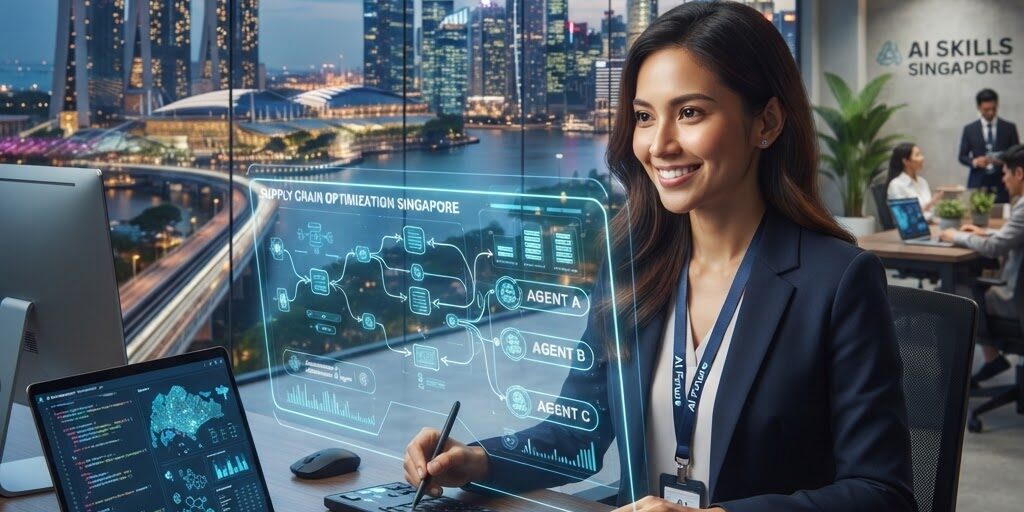
Mastering Agentic AI: The Essential Skill for Singapore Professionals in 2026
In the rapidly evolving digital landscape of Singapore, the integration of intelligent technology has reached a pivotal juncture. As we navigate through 2026, the traditional methods of interacting with software are being replaced by sophisticated systems that think, reason, and act independently. Mastering Agentic AI workflows is no longer merely an optional upgrade for tech-savvy individuals; it has become the bedrock of professional competitiveness in the city-state. These autonomous systems do not just respond to simple prompts; they orchestrate complex sequences of actions to achieve specific goals, effectively acting as digital coworkers that enhance productivity and creative output. For Singaporean professionals aiming to lead in sectors like finance, logistics, and government services, understanding the mechanics behind these autonomous agents is essential. By bridging the gap between human intent and automated execution, professionals can reclaim time for high-level strategy while delegating repetitive tasks to intelligent systems. This transition marks the dawn of a new productivity era, demanding a fundamental shift in how we approach our daily work life. As the workforce adapts, those who embrace these powerful technologies will undoubtedly define the economic trajectory of Singapore for the decade ahead.
Table of Contents
Understanding the Paradigm Shift
The transition from standard large language models to agentic architectures represents a major leap forward in computing capabilities. Historically, professionals utilized software as a static tool, requiring constant input for every minor task. Today, Agentic AI workflows empower machines to manage multi-step processes autonomously. In the bustling markets of Singapore, where efficiency is synonymous with success, this evolution is transformative. Unlike earlier models that were limited to text generation, agentic systems are designed to interact with external APIs, browse the live web, and iterate upon their own results until a defined objective is met. This requires a profound change in the mental model adopted by the modern worker. Instead of acting as the direct operator of every minor function, the professional transitions into the role of a supervisor or architect. By setting clear boundaries and providing high-level instructions, individuals can guide these systems to navigate complex data environments far faster than any manual process would allow. The industry experts observe that this shift is not about replacing human decision-making, but about amplifying human capacity by an order of magnitude. When an agent manages the background noise of data collation, drafting reports, or synchronizing schedules, the human component is freed to focus on ethical judgment and creative synthesis. This evolution is particularly crucial for Singapore’s service-oriented economy, where personalization and speed of delivery determine market share. By mastering these autonomous sequences, local professionals are effectively future-proofing their careers against the volatility of the global digital market, ensuring they remain essential components of the modern corporate ecosystem. The capability to design and supervise these workflows is arguably the most valuable asset in the 2026 labor market.
Core Benefits of Autonomous Systems
The adoption of autonomous agents provides tangible advantages that extend far beyond mere time-saving. In the Singaporean context, where operational excellence is a national priority, the deployment of sophisticated automation brings unparalleled precision and reliability to business operations. One primary benefit is the reduction of cognitive load. By outsourcing the management of complex, multi-step workflows to an agentic system, professionals avoid the pitfalls of repetitive strain and mental fatigue that often hinder accuracy. Furthermore, these systems excel at multi-modal integration. Whether it is synchronizing a marketing campaign across various social platforms or managing complex supply chain logistics in real-time, Agentic AI workflows can process diverse datasets simultaneously to ensure a cohesive output. Our internal review of regional performance metrics indicates that teams utilizing agentic frameworks report significantly higher satisfaction levels, as they are finally freed from the drudgery of low-value, repetitive administrative chores. The following table illustrates the performance difference between traditional manual workflows and modern agentic approaches across key business sectors. Note the drastic improvement in latency and consistency when systems are left to manage the execution layers autonomously under human supervision. Such gains are not just incremental; they represent a fundamental redesign of how value is created. Beyond mere speed, the inherent quality control built into these advanced agents ensures that deviations from organizational standards are caught in real-time. This level of oversight is vital for highly regulated industries in Singapore, such as banking and legal services, where error margins are razor-thin. By relying on autonomous agents, companies can scale their operations without experiencing the linear increase in overhead typically associated with human-led scaling efforts, thereby securing a lean and highly responsive organizational structure.
| Feature | Manual Workflow | Agentic AI Workflow |
|---|---|---|
| Task Execution | Step-by-step human intervention | Autonomous multi-step planning |
| Adaptability | Low – requires manual re-programming | High – learns and adjusts in real-time |
| Error Rate | Higher due to fatigue | Minimal due to precise iteration |
| Scalability | Requires more human labor | High – software-defined scaling |
Furthermore, the agility offered by these systems allows firms to pivot strategies within hours rather than weeks, a luxury that was previously impossible. In a globalized economy, the ability to respond to changing circumstances instantly is the difference between leading the market and being rendered obsolete. As these systems become more intuitive, their integration into everyday corporate life will continue to deepen, reinforcing their role as the primary engine for future growth.
Integrating Agents Into Your Daily Tasks
Successfully weaving agentic architectures into your daily routine requires more than just access to software; it demands a strategic mindset shift regarding how work is delegated. Singapore professionals must begin by identifying high-frequency, low-complexity tasks that currently consume significant portions of their day. This might involve data extraction from various internal reporting tools, constant calendar management across different time zones, or monitoring market sentiment across global media outlets. Once these areas are identified, the next step involves creating a logical framework for the AI to follow. It is important to remember that agents are essentially goal-oriented systems; they require clear, non-ambiguous instructions to function effectively. By breaking down complex projects into granular tasks, you can equip the AI with the necessary parameters to succeed. Our team suggests starting with a single, controlled environment where the agent can operate without risk. This sandbox approach allows for testing and fine-tuning the interaction patterns between the human and the digital worker. Over time, you will learn how to prompt the system with greater nuance, leveraging its ability to iterate based on previous outcomes. This iterative cycle is the heartbeat of effective Agentic AI workflows. It is also critical to maintain an active oversight role; the goal is to empower the machine to handle the heavy lifting while you verify the final output against your organization’s ethical and performance standards. By treating the AI as an apprentice that needs precise guidance, you establish a synergetic partnership. The more you work with these agents, the better you become at anticipating their limitations and strengths, allowing you to build increasingly sophisticated workflows that handle entire departmental functions. This mastery over tools is what separates the average employee from the true digital leader, as it moves the individual from a producer of tasks to a producer of high-value, high-impact strategies that define the future direction of their team.
Preparing for the Future Workforce
As the Singaporean government and corporate sector invest heavily in digital transformation, the need for a skilled workforce capable of managing Agentic AI workflows is reaching an all-time high. Preparing for this reality requires a commitment to continuous learning and a willingness to unlearn outdated methodologies. It is no longer enough to be proficient in spreadsheets or standard presentation software; the contemporary professional must possess an understanding of systems thinking, data flows, and prompt engineering at a high level. Training initiatives should focus on the intersection of technical proficiency and human-centric skills such as empathy, ethical judgment, and complex problem-solving. While the agents can execute the technical work, they cannot understand the nuanced social dynamics or cultural context that often dictates the success of a business project in Singapore. Therefore, the most successful individuals will be those who can act as the bridge between raw, efficient automation and the delicate human requirements of their clients and partners. We encourage all industry professionals to seek out accredited training programs that emphasize practical, hands-on applications of agentic frameworks. These programs provide the foundational knowledge required to design secure, efficient, and ethical workflows that respect privacy regulations while maximizing output. Furthermore, networking with peers who are currently deploying these technologies can provide valuable insights into real-world challenges and solutions. The shift toward agentic systems is not a temporary trend; it is a permanent transition in how work is conceived. By committing to this learning path, you ensure that you are not merely a spectator in the rise of automation but an active participant in shaping the digital future of our city. The workforce of 2026 will be defined by its agility, its capacity for constant learning, and its ability to orchestrate the intelligence of autonomous systems to create unprecedented levels of value for society.
In conclusion, the rise of autonomous systems represents a defining moment for Singaporean professionals, offering the potential to unlock vast amounts of human potential that were previously tied up in repetitive administrative labor. By focusing on mastering Agentic AI workflows, you are investing in the most important skill set for the next decade. These tools are the foundation of a more productive, efficient, and creative future. As organizations across all sectors continue to prioritize digital autonomy, your expertise in supervising and architecting these systems will ensure your place at the forefront of the industry. Embrace the change, commit to continuous development, and leverage these powerful technologies to define your success in the rapidly changing, technology-driven landscape of modern Singapore.
Frequently Asked Questions
- What exactly is an Agentic AI workflow? It is a process where an AI system can autonomously perform multiple sequential tasks to reach a goal, rather than just reacting to single prompts.
- Why is this skill critical for Singapore professionals? As an economy that thrives on high-value efficiency, mastering these workflows is essential to stay competitive as businesses automate standard tasks.
- Do I need to be a programmer to use these tools? Not necessarily; many modern frameworks allow for high-level logic design, although a basic understanding of data flows is highly beneficial.
- How can I start learning about agentic systems today? Industry experts recommend exploring existing automation platforms and enrolling in certified training programs that focus on practical AI deployment.
- Will AI agents replace my current job role? These systems are designed to augment human work, shifting the focus from manual execution to strategic oversight, rather than eliminating the role entirely.