Mastering Agentic AI: The Essential Skills for Singapore Professionals in 2026
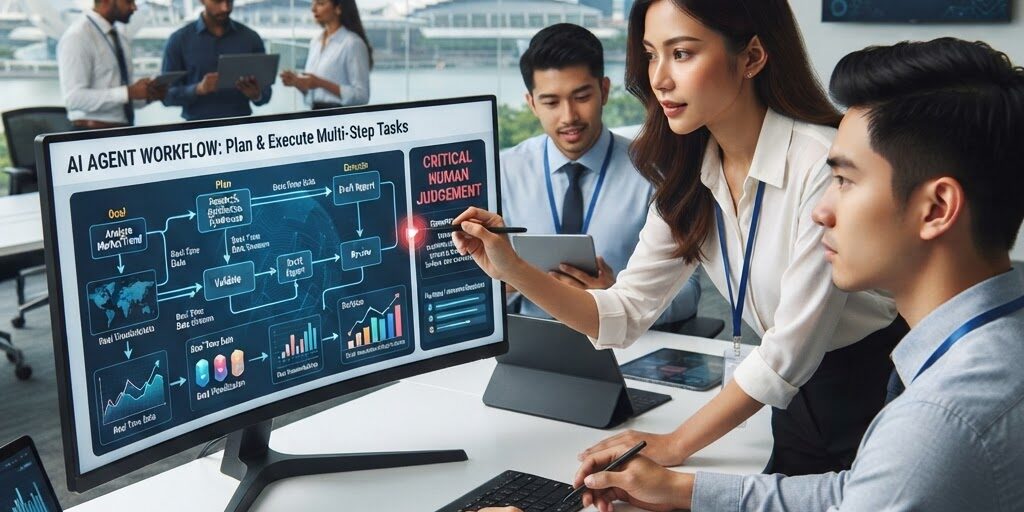
As the digital landscape evolves rapidly in 2026, Singapore remains at the forefront of technological transformation. Professionals across the region are shifting their focus from basic generative models to the next frontier: Agentic AI. This advancement represents a fundamental change in how we interact with software, moving beyond simple prompt-response interactions to autonomous systems capable of complex problem-solving. For those seeking professional development, Agentic AI training Singapore programs are now essential to stay competitive. These systems are designed to plan, iterate, and execute multi-step tasks independently, acting as digital teammates that require sophisticated oversight. Mastering these tools means moving past static automation into a dynamic landscape where human judgment and technical AI proficiency converge. By understanding how to orchestrate these agents, professionals can unlock unprecedented productivity, effectively managing complex workflows that were previously manual. This article explores the core competencies required to navigate this shift, ensuring that Singaporean professionals remain leaders in the global digital economy while harnessing the power of autonomous intelligence in their daily operations.
Table of Contents
Understanding the Shift to Autonomous Systems
The transition from static generative AI to Agentic AI marks a significant paradigm shift in the modern workplace. Unlike traditional tools that wait for specific user instructions for every single step, agentic systems possess the capability to break down high-level objectives into actionable sub-tasks. They essentially function as autonomous entities that can navigate digital environments, use external tools, and refine their own outputs based on feedback. In the context of Agentic AI training Singapore initiatives, this means learning how to define goals, set constraints, and supervise the logic of these systems. The ability to trust an agent to handle complex data retrieval or multi-platform coordination is becoming the new gold standard for administrative, analytical, and operational roles. Industry experts emphasize that agents are not merely replacements for workers but are instead sophisticated extensions of human capability that amplify output. As these systems learn to handle nuanced workflows, the focus of the professional shifts toward strategic architectural design and systems management. Professionals must now understand the limitations of current models, such as hallucinations or context drift, while learning how to architect guardrails that ensure reliable performance. By moving from a user of tools to an architect of agents, professionals enable a more efficient business cycle. The shift is not just about adopting a new piece of software; it is about fundamentally restructuring how tasks are prioritized and executed within a professional ecosystem. This autonomous capability provides a significant competitive advantage for those who can integrate it seamlessly into existing business logic. Understanding the lifecycle of an agentic process is the first step toward true organizational efficiency in the 2026 business climate.
Building Technical Proficiency and AI Orchestration
Technical proficiency in the age of agentic systems goes beyond knowing how to write a prompt. It requires a deep understanding of AI orchestration and the ability to manage the interaction between different models, databases, and APIs. Agentic AI training Singapore modules now frequently focus on tool-use, where professionals learn to bridge the gap between large language models and operational software like CRMs, ERPs, and collaborative document suites. Mastering orchestration involves learning how to manage the ‘state’ of an agent, ensuring that it remains focused on the primary objective while handling exceptions. For instance, if an agent is tasked with market research, it must be able to pivot if it hits a paywall or discovers unexpected data patterns. This requires setting up robust logical workflows that allow the agent to evaluate its own progress. Our team of industry specialists notes that those who excel in this field often come from diverse backgrounds, including business analysis and systems engineering, because they understand the logic of the business as well as the logic of the machine. The goal is to build an environment where agents can communicate with one another to solve multi-faceted problems. Technical training now covers fundamental concepts like agent reasoning loops, chain-of-thought prompting, and memory management for long-horizon tasks. Without these technical foundations, an agent might lose context or fail to complete a multi-step objective effectively. Learning to debug these systems is equally important; because agents make decisions, identifying why an agent took a certain path is a critical skill for any professional in 2026. This technical fluency allows Singaporean professionals to build resilient digital infrastructure that grows more capable over time as they refine their orchestration methods.
| Skill Category | Old Paradigm (2024) | New Paradigm (2026) |
|---|---|---|
| Task Execution | Manual Prompting | Autonomous Orchestration |
| Tool Interaction | Human-in-the-Loop | Agent-to-API Integration |
| Goal Setting | Single-Prompt Tasks | Multi-Step Strategic Planning |
| Error Handling | Manual Correction | Self-Correcting Feedback Loops |
The Crucial Role of Human Judgment in AI
Even as systems become more autonomous, the necessity of human judgment has never been higher. Agentic AI is incredibly powerful, but it lacks the contextual understanding and ethical reasoning that are inherently human. In the context of Agentic AI training Singapore, there is a strong emphasis on the concept of human-in-the-loop oversight for high-stakes decisions. An agent might suggest an optimal business strategy based on cold data, but a human must assess that strategy against company values, long-term brand reputation, and nuanced market sentiment. The professional of 2026 acts as a judge and validator, not just an executor. This requires developing a critical mindset that is capable of auditing AI logic. We teach that you should never blindly trust an output; instead, you must verify the steps the agent took to reach that conclusion. This involves identifying potential biases in the training data, questioning the constraints set by the agent, and ensuring that the agentic flow remains within ethical boundaries. Furthermore, human intuition is required to manage the change that AI brings to the workforce. While agents handle the heavy lifting of data synthesis, humans must manage the stakeholder relationships that define business success. As agents take over the repetitive tasks, the human role transitions into high-level strategy and emotional intelligence, both of which are critical for navigating complex negotiations and client relationships. This shift makes the human role arguably more vital than ever before. By maintaining a high degree of skepticism and combining it with the leverage provided by agentic systems, professionals can ensure that their decisions are not only efficient but also aligned with human-centric goals. The most successful professionals will be those who can expertly balance machine autonomy with sound, deliberate human judgment in every single project.
Future-Preparedness and Continuous Learning
Future-proofing your career in Singapore requires a proactive approach to skill acquisition. The pace of change in the artificial intelligence sector is relentless, meaning that the skills learned today may evolve significantly within a few years. Engaging in regular Agentic AI training Singapore is one of the most effective ways to stay ahead of these trends. Continuous learning ensures that your knowledge base remains updated as new architectural patterns for agents emerge. Professional development in this field is not a one-time endeavor but a sustained commitment to understanding the latest advancements in autonomous systems. By participating in ongoing workshops, webinars, and hands-on laboratory experiences, you can keep your technical and strategic skills sharp. Moreover, building a network of peers who are also navigating the AI landscape allows for the exchange of best practices, troubleshooting strategies, and insights into local industry standards. It is also important to understand the regulatory environment in Singapore, as policies regarding AI usage are constantly shifting to reflect new capabilities. Staying informed about these regulations ensures that your agentic workflows remain compliant and secure. As the demand for AI literacy grows, professionals who can demonstrate a mastery of agentic concepts will be in high demand, positioning themselves for leadership roles that oversee the integration of these technologies. Ultimately, preparation is about mindset. You must be willing to iterate on your own processes just as you expect your AI agents to iterate on theirs. Embracing a growth mindset and staying curious about how different sectors, such as finance, healthcare, and education, are utilizing agents will broaden your professional horizons. The future belongs to those who view AI as a collaborative partner, consistently upgrading their skills to match the capabilities of their digital counterparts.
Conclusion
Mastering Agentic AI is no longer a luxury but a fundamental necessity for Singaporean professionals looking to thrive in 2026. As we have explored, this shift requires a combination of technical orchestration, careful human oversight, and a commitment to lifelong learning. By moving beyond simple prompting and embracing the complexity of autonomous workflows, professionals can reclaim their time for higher-level strategic work. As you seek out Agentic AI training Singapore options, focus on programs that emphasize hands-on application and critical thinking. The future of work is not about human versus machine; it is about the powerful synergy created by human judgment and machine autonomy. Stay curious, remain vigilant in your oversight, and continue to build the skills that define the next generation of leadership in this fast-moving digital economy.
Frequently Asked Questions
What exactly is Agentic AI?
Agentic AI refers to systems that can autonomously plan, reason, and execute multi-step workflows to achieve a defined goal without constant human intervention.
Why is Agentic AI training Singapore gaining popularity?
Singaporean businesses are rapidly adopting automation, and workers need specialized skills to manage, supervise, and deploy these autonomous agents effectively and securely.
Do I need to be a programmer to use Agentic AI?
While coding knowledge helps, modern low-code orchestration tools allow many professionals to build and manage agentic workflows without extensive programming experience.
How does human judgment fit into an automated system?
Humans act as the final authority, setting the ethical guardrails, auditing agentic decisions for accuracy, and providing the context that machines lack.
How can I stay updated on AI trends?
Participating in local professional workshops, subscribing to industry journals, and networking with other AI practitioners are excellent ways to remain current.