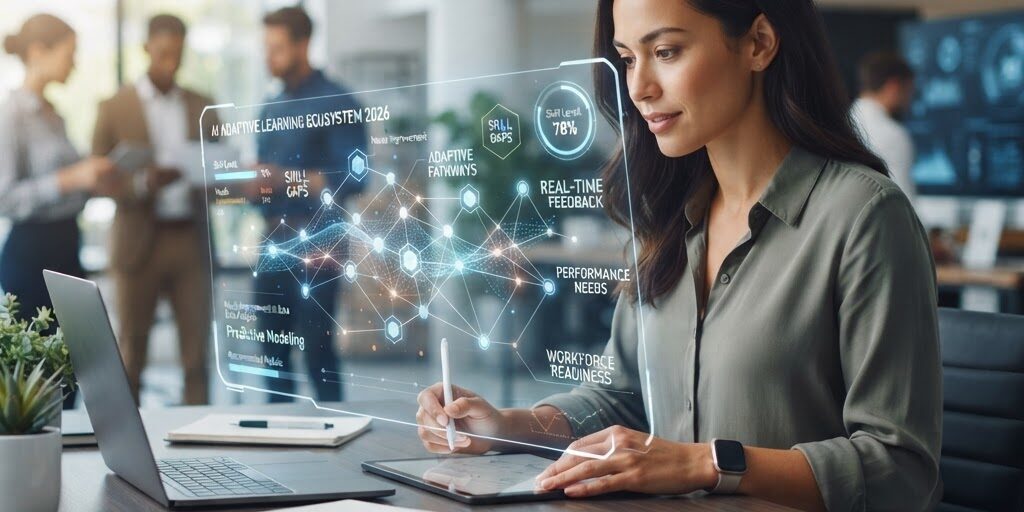
AI Training Trends 2026: Why Adaptive Learning is the Future of Workforce Readiness
As we navigate the professional landscape of 2026, the traditional models of corporate education have undergone a massive transformation. The emergence of AI-powered corporate training has moved beyond simple automation, evolving into a sophisticated infrastructure that supports lifelong learning. Companies no longer rely on static video libraries or one-size-fits-all slideshows. Instead, they are deploying hyper-personalized learning ecosystems that respond to the unique needs of every team member. By leveraging real-time performance analytics and generative intelligence, these platforms bridge critical skill gaps before they become bottlenecks. This shift represents a fundamental change in how organizations view talent development. By moving toward dynamic, adaptive frameworks, businesses can ensure that their workforce is not only prepared for current challenges but is also resilient enough to handle the rapid technological shifts expected in the coming decade. As we explore these trends, it becomes clear that human-centric AI strategies are the cornerstone of sustainable organizational growth in a competitive, fast-paced global economy.
Table of Contents
The Evolution of Hyper-Personalization
In the current technological climate, the effectiveness of training hinges on how well a system understands the individual learner. The era of generic corporate compliance modules is officially over. Modern AI-powered corporate training platforms utilize sophisticated algorithms to analyze historical learning patterns, role-specific requirements, and current project workflows. By synthesizing this data, the system crafts a unique curriculum for every staff member. This means that if an employee struggles with specific coding frameworks or project management methodologies, the system proactively adjusts the difficulty level, offers additional practice scenarios, and delivers content in the format that best suits their retention profile. This level of granularity ensures that time is never wasted on redundant material. When employees engage with content that feels relevant, personalized, and appropriately challenging, their intrinsic motivation increases, leading to better outcomes for the business. Furthermore, these systems continuously learn from the learner. They recognize when a user masters a topic and automatically escalate the complexity, ensuring that the training never stagnates. This fluidity is the hallmark of the 2026 workplace. Adaptive learning environments act as a continuous feedback loop where content is generated and refined on the fly. This avoids the common pitfall of ‘training fatigue’ where workers feel forced to complete unrelated tasks. By focusing on precision, companies can turn training from a chore into a high-value asset that drives career growth and improves retention across all departments. The investment in these adaptive architectures is not merely a cost but a competitive advantage that enables rapid talent transformation in a volatile market where skills become obsolete at an unprecedented rate. Experts suggest that the focus on personalization will remain the single most important driver of training ROI for years to come.
Data-Driven Performance Analytics
The transition toward AI-powered corporate training is fueled by the unprecedented depth of data now available to learning designers. In 2026, the concept of a ‘completion rate’ is considered a vanity metric of the past. Instead, organizations monitor ‘competency velocity’ and ‘application accuracy.’ This means that the system measures how fast a team member learns a new skill and, more importantly, how effectively they apply that knowledge to real-world tasks within the company infrastructure. The following table illustrates the shift from legacy metrics to the new standard of AI-driven evaluation methodologies that firms currently prioritize for measuring long-term professional development efficacy.
| Legacy Training Metric | AI-Driven Performance Metric |
|---|---|
| Course Completion Rate | Skill Acquisition Velocity |
| Time Spent on Module | Practical Application Precision |
| Satisfaction Surveys | Real-time Behavior Modification |
| Pre-Post Exam Scores | Predictive Performance Modeling |
By mapping learning data against actual project performance metrics, organizational leaders can identify exactly which training interventions translate into higher revenue or better operational efficiency. This data-driven approach removes the guesswork from human resources and professional development strategies. When an AI identifies a widespread skill gap across a department, it can trigger an automated update to the training paths for all affected individuals, ensuring that the entire organization stays aligned with shifting business goals. Moreover, predictive modeling allows management to anticipate future needs before they manifest as performance deficits. If a company plans to integrate a new type of automation technology in six months, the adaptive learning system can begin preparing the workforce today, adjusting difficulty levels based on the current baseline of each employee. This foresight is critical for maintaining market agility. By integrating these analytical tools into the core of daily operations, corporations move away from reactive training solutions toward proactive knowledge management. This transition creates a workforce that is perpetually ready for change, effectively eliminating the fear often associated with large-scale digital transformations within a modern corporate environment.
Scalability and Global Workforce Alignment
Scaling a training initiative across a global enterprise was once an logistical nightmare involving regional silos and inconsistent instructional quality. AI-powered corporate training has effectively dismantled these barriers by offering centralized intelligence with localized delivery capabilities. In 2026, AI can translate, localize, and adapt training content to match cultural nuances and linguistic preferences in seconds. This ensures that a team member in a satellite office has access to the exact same quality of education as a counterpart at headquarters, but the content is presented in a way that is relevant to their local regulatory environment and business context. The scalability of these platforms is profound. Because the system utilizes generative models, there is no longer a need to manually update hundreds of courses every time a product feature or internal policy changes. The AI updates the master knowledge base, and the adaptive learning modules cascade these changes throughout the entire global network automatically. This creates a unified corporate culture while respecting the individuality of global talent. Furthermore, the decentralized nature of these systems allows for peer-to-peer knowledge sharing enhanced by AI. When an expert in one region solves a complex problem, the system can capture the methodology, turn it into a learning object, and deploy it to the rest of the organization. This ‘collective intelligence’ model turns every employee into a contributor to the company knowledge base. The result is a highly efficient, self-sustaining ecosystem that grows more intelligent as the company expands. Organizations that leverage these scalable AI infrastructures avoid the costly downtime associated with traditional onboarding and retraining. By maintaining a single source of truth that is constantly refreshed, the business ensures that all team members are rowing in the same direction, regardless of their physical location, which is a major factor in international success.
Human-Centric Design in AI Learning
Despite the high-tech nature of AI-powered corporate training, the most successful implementations in 2026 are those that prioritize the human element. The goal of technology is not to replace human instructors or mentors but to augment their capability. By automating the delivery of rote information and tracking basic competency, the AI frees up human facilitators to focus on complex coaching, mentorship, and interpersonal skill development. This balance is crucial. A system that is purely algorithmic can feel cold or overly restrictive; however, when designed with human-centric principles, it becomes a powerful partner in an employee’s professional journey. Empathy-driven interfaces allow the AI to detect when a user is experiencing frustration or burnout, prompting the system to suggest a break, a different learning modality, or a session with a human mentor. This nuanced awareness prevents the common feeling of being ‘managed by a machine’ and instead fosters a collaborative relationship with the digital tools. Additionally, human-centric design encourages curiosity rather than mere compliance. Systems now provide ‘exploration paths’ where learners can dive deeper into topics that interest them, even if those topics aren’t strictly required for their current role. This fosters a growth mindset and keeps employees engaged for the long term. Companies that treat their AI learning platforms as ‘Digital Learning Companions’ see significantly higher participation rates. By integrating these systems into daily workflows through seamless APIs, learning becomes an ambient part of work rather than a separate, disruptive task. When technology adapts to the human pace of learning rather than forcing the human to adapt to a rigid machine schedule, the psychological barrier to professional development disappears. Ultimately, this leads to a more satisfied, capable, and loyal workforce that feels truly invested in by their employer, which remains the single most effective way to retain top-tier talent in the competitive 2026 professional landscape.
In conclusion, the shift toward AI-powered corporate training is not merely a technological upgrade; it is a fundamental redesign of how companies foster human potential. By embracing hyper-personalization, data-driven insights, global scalability, and human-centric design, organizations can build a resilient workforce that thrives on continuous improvement. These 2026 trends highlight a future where learning is integrated, dynamic, and profoundly effective. Businesses that prioritize these adaptive ecosystems today will secure their place as industry leaders, capable of navigating the uncertainties of tomorrow with confidence. The transition to AI-enabled growth is inevitable, but those who implement it with a focus on both precision and people will see the greatest returns, creating a lasting legacy of workforce excellence and innovation that will define the next chapter of corporate evolution.
Frequently Asked Questions
How does AI-powered corporate training differ from traditional e-learning?
Traditional e-learning relies on static courses, while AI-powered training adapts content in real-time based on individual performance and skill gaps.
Is this technology suitable for small businesses?
Yes, modern AI tools are highly scalable and can be tailored to the specific budget and size of any organization, making them accessible to small and medium enterprises.
Does AI replace the need for human mentors?
No, it complements them. AI handles data and rote learning, allowing human mentors to focus on high-level coaching, empathy, and leadership development.
How is employee privacy managed in these systems?
Leading platforms prioritize data security, ensuring that individual performance metrics are used solely for professional development and not for biased surveillance or unfair disciplinary actions.
Can AI training help with compliance requirements?
Absolutely, AI systems excel at tracking regulatory updates and ensuring all employees receive timely, localized training to meet global and regional compliance standards.