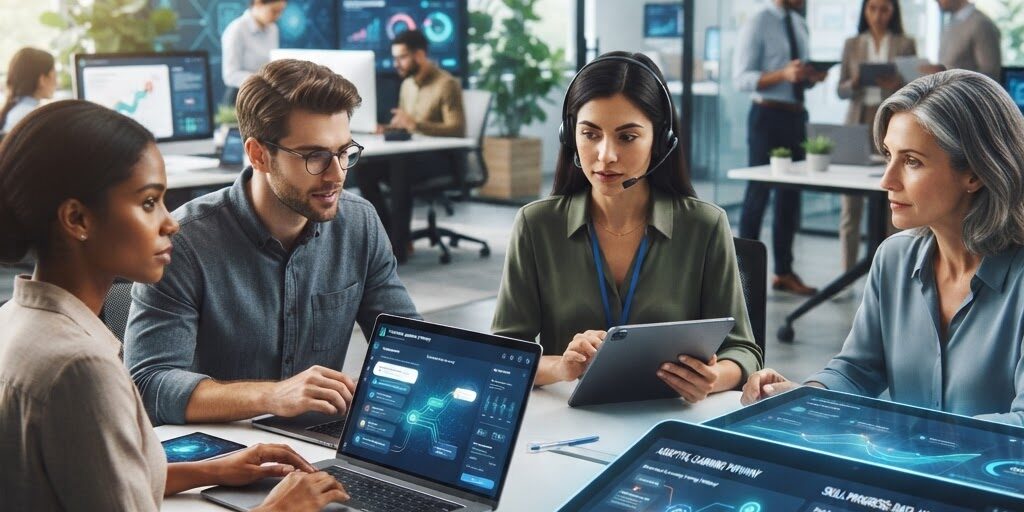
How AI-Powered Adaptive Learning is Transforming Workforce Upskilling in 2026
The landscape of professional development has undergone a seismic shift, moving away from rigid, one-size-fits-all training programs toward a more agile paradigm. In 2026, the adoption of AI-powered adaptive learning has become the gold standard for organizations aiming to remain competitive in a rapidly evolving market. Unlike traditional methods that force every employee to consume the same standardized content regardless of their background or current proficiency, adaptive learning leverages advanced algorithms to tailor the educational experience to the individual. By continuously analyzing employee performance data, these systems identify specific knowledge gaps and adjust the curriculum in real time. This ensures that every worker receives the exact support they need precisely when they need it, which maximizes retention and accelerates speed-to-competency. As organizations face the dual pressures of technological disruption and a widening skills gap, embracing this intelligent approach is no longer merely an advantage; it is a fundamental necessity for sustainable growth. This article explores how these sophisticated ecosystems function, the measurable impact they have on organizational performance, and why they represent the future of human capital management in an increasingly complex digital economy.
Table of Contents
The Mechanics of Personalized Skill Development
At the core of AI-powered adaptive learning lies a complex architecture of machine learning models and predictive analytics. These systems function by mapping out a granular inventory of skills required for specific roles and then benchmarking an individual employee against those standards. Instead of assigning a linear course sequence, the software initiates a diagnostic phase, evaluating the learner through targeted assessments and interactive simulations. If an employee demonstrates mastery in a certain domain, the platform automatically streamlines that portion of the curriculum, allowing the worker to focus their valuable time on areas where they genuinely struggle. This dynamic pacing is the hallmark of modern corporate training.
Furthermore, these platforms account for different learning styles and delivery preferences. For instance, if an individual performs better with visual aids rather than text-heavy documentation, the AI adjusts the content format accordingly. This level of personalization significantly reduces cognitive overload, a common drawback in traditional long-form training modules. By providing just-in-time learning, the software serves as a proactive coach rather than a static library. Employees receive micro-learning interventions, which are short, bite-sized lessons designed to reinforce concepts during their actual workday tasks. This approach creates a feedback loop where the system constantly learns from the user’s behavior, ensuring that the difficulty level remains within the optimal zone of proximal development. Consequently, morale improves because employees feel that their time is respected and their unique growth path is prioritized. The infrastructure relies heavily on cloud-based computing and real-time synchronization, allowing these insights to be accessed across mobile devices and workstations worldwide without compromising the coherence of the learning experience or the accuracy of the underlying data analytics provided by the training architecture.
Data-Driven Insights for Talent Retention
The transition toward AI-powered adaptive learning provides organizational leadership with unprecedented visibility into the workforce’s capabilities. Before the widespread adoption of these tools, assessing the ROI of training initiatives was often a matter of speculation. Now, managers can observe real-time progression, identifying which skills are currently being developed across different departments and where potential talent shortages might occur in the future. By aggregating data across thousands of interactions, the system highlights trends that would be invisible to the human eye, such as a subtle decline in proficiency regarding a specific internal tool or a sudden surge in interest regarding emerging industry technologies. This visibility is essential for strategic workforce planning and succession management.
| Metric | Traditional Training | AI Adaptive Learning |
|---|---|---|
| Time to Proficiency | 4-6 Weeks | 1-2 Weeks |
| Learner Engagement | Low to Moderate | High and Sustained |
| Content Relevance | Generic | Role-Specific |
| Data Accuracy | Lagging Indicators | Real-Time Analytics |
Beyond performance tracking, these data-driven insights are a powerful catalyst for retention. Employees are statistically more likely to remain with an organization that invests in their personal career trajectory and provides them with clear, actionable paths to advancement. When the learning experience is personalized, workers report a higher sense of agency and purpose. The AI can suggest professional certifications, mentorship opportunities, or internal project rotations that align with the user’s long-term career goals as indicated by their performance history. This creates a culture of continuous development where the employee feels the organization is actively invested in their success. By leveraging this data, human resources teams can better understand the correlation between training outcomes and staff longevity. The resulting insights allow for a more empathetic approach to management, as leaders can offer personalized support precisely when an employee hits a performance plateau. Ultimately, the ability to predict skill decay and intervene with targeted upskilling keeps the entire organization resilient against the volatility of the global marketplace, turning the training department from a cost center into a strategic asset for growth and stability.
Scalability and Efficiency in Global Training
Scaling professional training for a multinational, diverse workforce presents immense logistical challenges, but AI-powered adaptive learning solves these through automation and intelligent content delivery. In the past, training teams struggled with the high costs associated with live instruction, travel, and the development of massive amounts of static material that would inevitably become obsolete. With adaptive platforms, the content itself is modular. As industry standards or internal protocols change, content creators can update specific blocks of information, and the system immediately propagates those changes across the entire learning ecosystem. This ensures that every member of the organization, regardless of their location, is accessing the most up-to-date information available, eliminating the risk of fragmented knowledge and non-compliance with new industry regulations.
Moreover, these platforms facilitate massive scalability by removing the dependence on human trainers for every interaction. While human mentorship remains vital for high-level soft skills and leadership development, the baseline technical training can be managed entirely by the AI. This allows for a blended learning approach where the human experts focus their efforts on high-impact coaching, while the software handles the high-volume, repetitive task of knowledge transfer. This model is exceptionally effective for onboarding new hires. Instead of drowning a new employee in a week of classroom sessions, the adaptive system curates a personalized journey that accelerates their assimilation into the team. Because the platform can operate 24/7 in multiple languages, it effectively breaks down geographical barriers, creating a unified educational experience that reflects the global nature of modern business. The efficiency gains are substantial, freeing up administrative staff to focus on higher-level strategic planning. By automating the delivery and evaluation process, organizations can manage the training of thousands of employees with the same level of care and individual attention as a small, local team, maintaining quality while simultaneously reducing the overhead associated with large-scale human capital development initiatives.
Future Trends in AI Integration
As we look beyond 2026, the integration of AI-powered adaptive learning is poised to deepen, incorporating more sophisticated technologies like augmented reality and immersive simulations. The next wave of innovation will focus on emotional intelligence and predictive behavioral analytics. Current systems are excellent at measuring cognitive performance and technical skill retention, but future models will begin to account for the learner’s state of mind and engagement levels. By analyzing subtle patterns in how a user interacts with the platform, the AI will be able to detect burnout or disengagement before it impacts performance, prompting the system to suggest rest periods or shifts in learning content to reignite curiosity and motivation. This human-centric approach will be essential in a future where the lines between professional and personal learning continue to blur.
Furthermore, the interoperability between AI learning platforms and other organizational tools will increase. We are moving toward a future where the learning ecosystem is integrated directly into the workflow. If an employee is working on a complex project and encounters a technical hurdle, the AI will recognize the context of the work and push a micro-lesson that solves the exact problem at that moment. This context-aware learning will make the concept of separate training time obsolete; learning will simply become a byproduct of doing one’s job. Additionally, the development of cross-industry training standards will allow for more seamless transitions as workers move between roles or organizations. By standardizing the way skills are tagged and evaluated via blockchain or similar secure, immutable ledgers, AI platforms will enable a global labor market where employees can prove their competencies with verified digital credentials. This evolution will further empower the workforce, giving them more control over their career development while providing organizations with the highly specialized, agile talent they need to remain competitive. The synergy between human ambition and machine intelligence will continue to redefine the boundaries of what is possible in workplace productivity and personal mastery.
Conclusion
The shift toward AI-powered adaptive learning represents the most significant advancement in corporate education in the last decade. By treating learning as a dynamic, personalized journey rather than a static, mandatory chore, organizations can foster a workforce that is not only highly skilled but also deeply engaged and resilient. As we have explored, the combination of real-time data, modular content, and intelligent automation creates a powerful ecosystem that benefits both the employer and the employee. While the technology is advanced, the goal remains human-centric: to unlock individual potential at scale. Organizations that successfully adopt these adaptive systems will find themselves better prepared to navigate the complexities of the future, turning the challenge of continuous upskilling into a primary engine for long-term success and competitive advantage.
Frequently Asked Questions
What is AI-powered adaptive learning? It is an educational approach that uses algorithms to provide personalized training paths based on an individual’s current knowledge and performance, ensuring relevant and efficient skill development.
How does this technology improve retention? By providing a tailored experience that respects the learner’s time and capabilities, employees feel more supported and engaged, which directly correlates to higher job satisfaction and lower turnover.
Is human interaction still necessary in this model? Yes. While AI handles technical training and assessments, human experts are critical for mentorship, complex problem solving, and developing nuanced leadership or soft skills that require emotional intelligence.
Can this scale globally? Absolutely. AI platforms provide 24/7 access and can support multiple languages, allowing multinational organizations to provide consistent, high-quality training across all global branches simultaneously.
What is the main benefit for managers? The primary benefit is visibility. Managers gain real-time analytics into their team’s strengths and weaknesses, allowing them to make informed decisions regarding talent deployment and professional development.