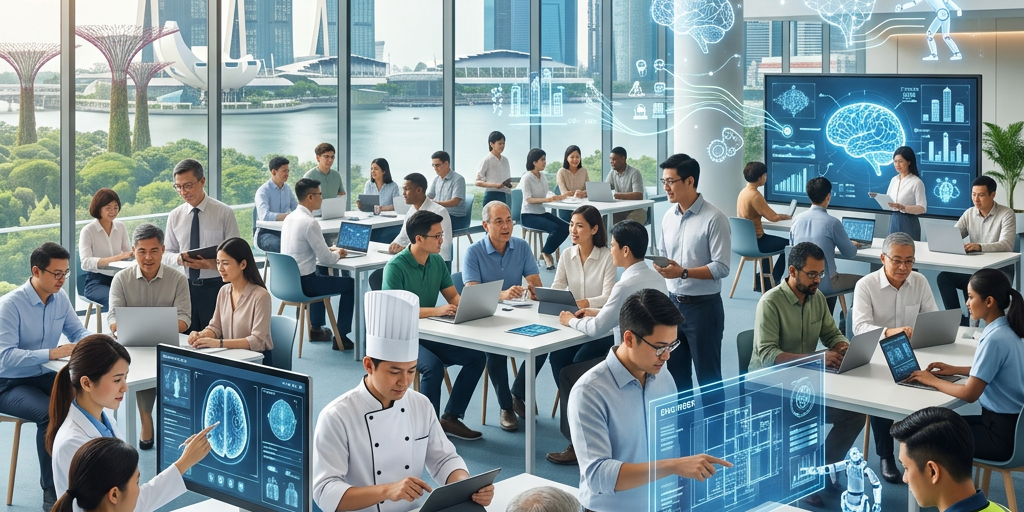
Singapore’s National AI Impact Programme: Empowering 100,000 Workers by 2029
The world is witnessing a technological revolution with artificial intelligence (AI) becoming an integral part of various industries. Recognizing this shift, Singapore’s government has launched the National AI Impact Programme, a comprehensive initiative aimed at empowering 100,000 workers by 2029. This program is designed to enhance AI literacy across diverse sectors, ensuring that the workforce is resilient and capable of adapting to the digital economy. The initiative not only focuses on providing training in AI applications but also aims to foster a culture of innovation and collaboration among employees and employers alike. As Singapore continues to advance in its technological capabilities, equipping its workforce with the necessary skills becomes crucial. By investing in AI training, the government is paving the way for a more competitive, efficient, and future-ready workforce.
Table of Contents
The Significance of the National AI Impact Programme
The National AI Impact Programme is groundbreaking for Singapore’s economy. With AI technologies evolving rapidly, the demand for a skilled workforce is paramount. The program’s significance lies in its structured approach to upskilling workers to meet current and future job demands. By reaching a target of 100,000 trained workers by 2029, Singapore aims to create a sustainable pipeline of talent equipped with AI competencies essential for various sectors, including healthcare, finance, and urban planning.
The initiative comes at a time when many businesses are embracing transformation through digitalization. By promoting AI literacy, Singapore is not only preparing its workforce for existing jobs but is also creating opportunities in nascent fields that involve advanced technological applications. Moreover, worker empowerment through AI training can drive productivity and efficiency, ultimately boosting the overall economy. As organizations adopt AI tools, the skills gap must be bridged between current employees and the expectations from such technologies.
This program also highlights the importance of lifelong learning in the age of AI. Upgrading skills will become a continuous process rather than a one-time endeavor. By providing structured opportunities for training, workers will be encouraged to embrace a mindset of adaptability and growth. The National AI Impact Programme is thus crucial for achieving long-term economic resilience in Singapore and ensuring that employees do not just survive but thrive in the face of advancing technologies.
Training Methods Employed in the Programme
The National AI Impact Programme employs a diverse range of training methods tailored to meet the varying needs of different workers. This multifaceted approach ensures that all participants, regardless of their background or prior experience in AI, can effectively engage with the content and emerge with valuable skills. One of the primary methods utilized is hands-on workshops where participants can directly interact with AI applications. This experiential learning fosters deeper understanding and retention of knowledge, allowing workers to grasp complex concepts more efficiently.
In addition to workshops, the program includes online courses and webinars that cater to those who prefer flexible learning environments. These digital formats enable workers to learn at their own pace while still accessing high-quality educational materials. Partnering with top educational institutions and technology firms, the National AI Impact Programme offers courses ranging from foundational AI concepts to more advanced analytics and machine learning topics.
Another critical component of the training is the collaboration with industry experts who share insights from the field. By integrating real-world applications into the curriculum, participants can witness firsthand how AI is transforming industries. This not only enhances the relevance of the training but also sparks innovative ideas among participants for potential applications within their respective roles.
A variety of assessment methods are also included to gauge participant progress and effectiveness of the training. Surveys and feedback are regularly collected to improve the curriculum continuously. Through these structured training methods, the National AI Impact Programme is poised to equip the workforce with the essential skills and knowledge required to adapt to the AI-driven job landscape.
Industry Collaboration and Partnerships
A key element of the National AI Impact Programme is its emphasis on collaboration between various stakeholders. The initiative has forged partnerships with leading organizations across sectors to enhance the training quality and provide practical experiences for participants. By working closely with businesses, the program can align its objectives with industry needs, ensuring that the skills taught are applicable and relevant.
Private sector involvement is substantial, with tech companies providing resources, expertise, and even internship opportunities for trainees. These partnerships facilitate a two-way exchange of knowledge where businesses gain insights into the latest educational methodologies specifically designed for AI training, while participants benefit from exposure to real-world applications. Such collaborations also pave the way for job placements post-training, effectively reducing the employment gap in AI-related roles.
Furthermore, the program actively engages with government agencies to establish policies that support the growth of AI talent in Singapore. This comprehensive approach ensures that training programs are not only well-funded but also reflect the strategic priorities of the nation concerning technological advancement.
To illustrate the benefits of collaboration, data from ongoing projects can be compared. For instance, the outcome measurements of trainees from outsourced programs may be compared with those who went through an industry-partnered curriculum. This analysis can lead to insights that further refine both the educational content and execution of training methods.
| Training Method | Description | Benefits |
|---|---|---|
| Workshops | Interactive sessions with hands-on experience. | Enhances understanding through practical application. |
| Online Courses | Flexible learning modules accessible from anywhere. | Allows self-paced learning tailored to individual needs. |
| Industry Partnerships | Collaboration with tech firms to integrate real-world applications. | Ensures the relevance of training and potential job placements. |
The Future Impact of AI on Employment in Singapore
The ongoing implementation of the National AI Impact Programme will likely have profound implications for the future employment landscape in Singapore. As workers gain AI competencies, we will witness a shift in the types of available job roles and functions across various industries. The enhancement of AI literacy will prepare employees to tackle new responsibilities that arise with technological advancements.
While there are concerns regarding job displacement due to automation, the National AI Impact Programme serves as a proactive strategy to mitigate such risks. By equipping the workforce with AI-related skills, the government aims to foster job creation in sectors that benefit from automation rather than eliminate them. New roles in areas like AI ethics, machine learning integration, and data analysis will emerge, providing diverse opportunities for job seekers.
Moreover, the program’s focus on continuous learning ensures that workers are adaptable, prepared to upgrade their skills in response to rapidly changing job requirements. This adaptability is crucial, as companies increasingly seek employees who possess not just technical skills but also critical thinking and innovation capabilities.
The future impact of AI on employment is expected to be largely positive if the National AI Impact Programme succeeds in its mission. As Singapore positions itself as a global leader in AI technologies, the initiative will not only solidify the nation’s economic standing but also create a thriving job market where workers are both resilient and innovative. The emphasis on lifelong learning, collaboration, and industry relevance will ultimately shape a workforce that is capable of navigating and thriving in the AI era.
In conclusion, the National AI Impact Programme represents a significant step towards a more knowledgeable and skilled workforce in Singapore. By empowering 100,000 workers by 2029, this initiative will foster economic growth and technological innovation, ensuring that the nation remains at the forefront of the AI revolution.
Frequently Asked Questions
- What is the National AI Impact Programme? It is a government initiative to train 100,000 workers in AI applications by 2029.
- Who can participate in the program? The program is open to all workers in Singapore, regardless of their prior experience in AI.
- How will workers be trained? Training will be through workshops, online courses, and industry collaborations.
- What industries are involved in the program? The program includes various sectors such as healthcare, finance, and technology.
- What are the expected outcomes of the program? The program aims to enhance AI literacy and prepare workers for future job opportunities in an AI-driven economy.