Navigating the 2026 AI Skills Gap: Why Employer-Led Pathways Are the Future
As we navigate the complexities of 2026, the global workforce is undergoing a transformation driven by rapid technological integration. In Singapore, the focus has shifted significantly toward localized, practical solutions to address the persistent talent debt in the technology sector. Central to this evolution are AI skills pathways Singapore organizations are now pioneering, moving beyond traditional academic frameworks toward employer-led models. These pathways prioritize real-world application, ensuring that learners acquire competencies tailored to specific organizational needs rather than abstract theoretical knowledge. As the pace of innovation accelerates, the gap between what universities teach and what companies require has widened, creating an urgent need for industry-driven education. By integrating internal mentorship, modular learning, and workplace-embedded training, enterprises can effectively bridge the divide. This educational shift is not merely a corporate trend but a strategic necessity for maintaining national competitiveness in an increasingly digital landscape. In this article, we will examine how these employer-led initiatives function, why they are superior to conventional education for current role requirements, and how workers can leverage these pathways to secure their long-term career growth in the evolving Singaporean job market.
Table of Contents
The Decline of Academic Exclusivity
For decades, formal university education served as the primary gatekeeper for professional advancement. However, the rise of artificial intelligence has rendered traditional, slow-moving curriculum cycles obsolete. In 2026, Singaporean industries are finding that a degree often lacks the agility required to keep pace with evolving machine learning frameworks or generative AI application tools. Academic institutions, while foundational, are inherently restricted by administrative bureaucracy and the time required for curriculum accreditation. Consequently, there is a mismatch between the capabilities of graduates and the immediate technical demands of high-growth firms. Industry experts have observed that the most successful professionals today are those who engage in continuous, experiential learning directly linked to their specific job functions. The limitation of relying solely on institutional degrees is that they do not account for the proprietary tools or specific data environments that a company uses. By shifting the burden of specialized education from the classroom to the boardroom, companies are taking control of their human capital development. This change is not meant to diminish the value of degrees but rather to highlight the necessity of supplemental, industry-specific training that is far more relevant. The decline of academic exclusivity is creating a more democratic environment where skills are valued over credentials, allowing for a more diverse range of candidates to enter high-tech roles. This evolution requires a fundamental change in how corporate leaders view hiring, where the focus moves from past qualifications to current potential and the ability to undergo rapid internal training. This shift marks the end of the static career path and the beginning of a dynamic, lifelong learning journey embedded within the corporate structure itself, providing a stable foundation for the future economy.
The Strategic Advantage of Employer-Led Models
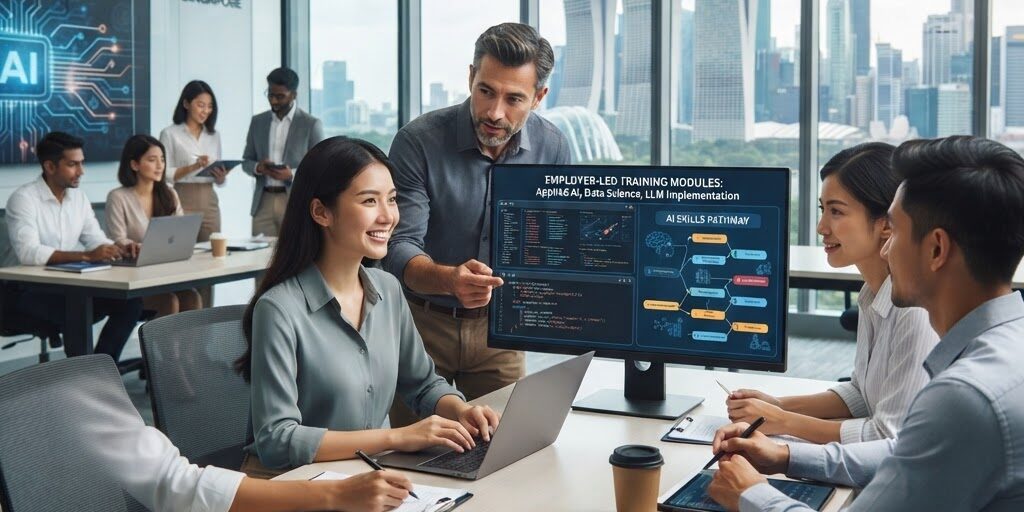
When organizations take the lead in designing their own training pathways, they create a symbiotic relationship between corporate goals and employee capabilities. By utilizing internal expertise to curate content, firms can ensure that workers are learning the most relevant tools for their specific industry niche. This model provides an immediate return on investment by reducing the time it takes for new hires to reach full productivity. For example, a fintech company can design training modules that focus specifically on the ethical implementation of AI in banking, a topic rarely covered in depth during general undergraduate studies. Furthermore, employer-led models encourage a culture of internal mentorship, where seasoned practitioners share tacit knowledge with junior staff, fostering a sense of community and loyalty. This internal knowledge transfer is critical in the Singaporean context, where the competition for top-tier talent is fierce. By creating a unique educational environment, companies not only close the talent gap but also increase employee retention, as individuals feel invested in by their employers. Furthermore, this approach allows firms to pivot training content in real-time as technology evolves, unlike external training providers that might take months to update their materials. The agility of these employer-led programs allows teams to stay ahead of the curve, constantly refreshing their internal skill sets without relying on third-party certifications. This creates a competitive edge that is difficult for rivals to replicate, as the training is intrinsically tied to the company’s specific mission and data ecosystem. Below is a comparison table illustrating the core differences between traditional and employer-led training methods used within the modern Singaporean business landscape.
| Metric | Traditional Academic | Employer-Led |
|---|---|---|
| Relevance | Broad and Theoretical | High and Role-Specific |
| Agility | Low – Slow Cycles | High – Real-Time Updates |
| Cost Basis | External Tuition Fees | Internal Investment/ROI |
| Skill Focus | Foundational Concepts | Practical Workplace Tools |
Implementing Sustainable AI Training Frameworks
Sustainability in training requires a long-term vision that balances immediate technical needs with the long-term professional development of staff. For a framework to be truly effective, it must integrate learning into the daily workflow rather than treating it as a separate, time-consuming activity. In 2026, forward-thinking Singaporean enterprises are implementing ‘micro-learning’ modules that can be accessed as needed during the work day. This approach ensures that employees do not experience burnout from excessive off-site training sessions. Furthermore, sustainability is achieved by creating feedback loops where instructors—who are often working practitioners themselves—continuously refine the curriculum based on what is happening on the ground. This iterative process prevents knowledge decay and ensures that the AI skills being taught are truly driving value. Another component of a sustainable framework is the inclusion of cross-functional training, which allows employees to understand how AI influences different areas of the business, from marketing to logistics. This holistic approach prevents the formation of departmental silos and fosters a culture of shared responsibility for technical success. When training is treated as a continuous, organic part of the work environment rather than a one-time event, the organization builds a resilient workforce capable of adapting to any technological disruption. Leaders must also ensure that the psychological safety of employees is prioritized; as roles change, there should be clear pathways for upskilling to minimize anxiety regarding job displacement. By tying training outcomes to career progression metrics, firms provide a clear incentive for employees to master new skills, ensuring that both the business and the individual grow in tandem throughout this challenging economic cycle.
The Future of Workforce Readiness in Singapore
Looking toward the next decade, the ability to adapt to AI-centric workplaces will be the defining characteristic of the Singaporean workforce. The movement toward employer-led pathways represents a maturation of the local talent strategy. As these programs become more refined, we anticipate a rise in public-private partnerships where industry leaders collaborate with policymakers to set training standards that benefit the entire national economy. This cooperative environment will likely result in a highly specialized, world-class workforce that is uniquely equipped to handle complex global challenges. While individual companies will lead the way in internal training, the collective impact of these initiatives will be a robust, future-proof labor market. We must recognize that the responsibility for skill development is shared; employees must show a willingness to adapt, while employers must provide the resources and environment to facilitate this learning. The integration of advanced AI into day-to-day operations will continue to automate routine tasks, leaving the human worker to focus on creative, strategic, and ethical decision-making. This shift highlights the need for soft skills to be integrated into AI training programs, ensuring that technology serves human goals rather than the other way around. Ultimately, the successful organizations of 2026 will be those that view their workforce as a flexible asset that can be continuously re-tooled. By fostering a climate of continuous learning and investing in the right AI skills pathways Singapore, firms can ensure they remain competitive in an increasingly globalized digital market. The future of workforce readiness is not found in a textbook, but in the hands of the employers who dare to lead the way in building the skills needed for tomorrow.
The shift toward employer-led AI training is a pivotal development in the Singaporean landscape, offering a practical solution to the persistent talent debt. By aligning training with specific job functions and fostering internal knowledge sharing, companies can build the agile, highly skilled workforce required to thrive in 2026 and beyond. This approach not only bridges the immediate gap but also cultivates a culture of continuous learning that will serve as the foundation for future innovation. As these models continue to evolve, they will redefine the standard for workforce development, ensuring that our local industries remain at the forefront of the global digital economy. Embracing this shift is essential for organizations aiming to secure their future in a rapidly changing world.
Frequently Asked Questions
- What are AI skills pathways in Singapore? These are structured, employer-led training programs designed to bridge the gap between academic theory and the specific technical requirements of modern job roles.
- Why is traditional education falling behind in 2026? Traditional academic curricula often update too slowly to keep pace with the rapid advancements and proprietary tool shifts in artificial intelligence.
- How do employer-led models benefit employees? They provide relevant, hands-on experience with tools currently in use, increasing job security, internal mobility, and long-term career growth.
- What is the primary role of mentorship in these pathways? Mentorship allows for the transfer of tacit, industry-specific knowledge from senior staff to newer employees, which is essential for mastering complex AI implementations.
- How can small businesses adopt these strategies? Even smaller firms can implement sustainable frameworks by utilizing micro-learning, peer-led training, and prioritizing skills-based hiring over rigid credential requirements.