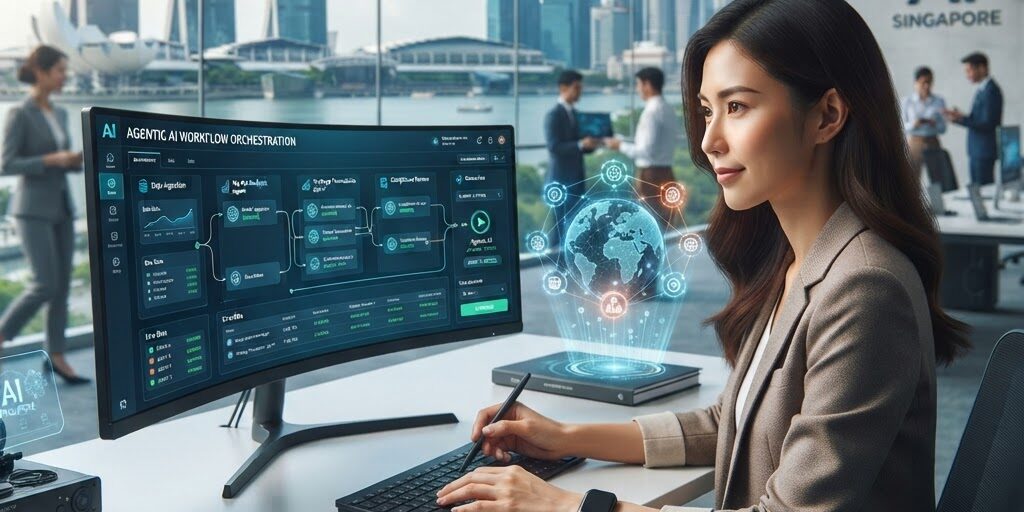
Mastering Agentic AI: The Essential Skill for Singapore Professionals in 2026
In the rapidly evolving digital landscape of Singapore, the ability to leverage technology effectively is the primary driver of career advancement. As we move deeper into 2026, the professional conversation has shifted dramatically from basic prompt engineering to the sophisticated implementation of agentic AI workflows. Unlike traditional chatbots that require constant human guidance for every minor task, agentic systems operate as autonomous entities capable of planning, reasoning, and executing multi-step operations across diverse software ecosystems. For Singaporean professionals aiming to maintain a competitive edge, understanding these systems is no longer optional; it is a fundamental requirement. This article explores the mechanics of agentic AI, providing a comprehensive guide on how you can integrate these powerful autonomous frameworks into your daily professional operations. By mastering these complex tools, you can automate mundane administrative burdens, perform advanced data analysis, and focus your energy on the high-level strategic decision-making that defines leadership in the modern economy. Embracing this transition today ensures you remain indispensable in an increasingly automated workforce where intelligent agents handle the tactical execution of complex projects.
Table of Contents
The Evolution of Autonomous Systems
The trajectory of artificial intelligence has moved from passive retrieval systems to active agents that possess the capability to initiate and complete complex assignments without human intervention. In the initial phases, AI models functioned primarily as search engines or text generators, requiring users to iterate constantly through prompts. However, the current standard involves agentic AI workflows, which allow software to act as a digital colleague. These agents analyze a prompt, break it down into a sequence of executable logical steps, and use specialized tools to achieve the goal. This evolution is particularly relevant for Singaporean industries such as finance, logistics, and professional services, where efficiency and accuracy are paramount. By transitioning from static interaction to dynamic orchestration, professionals can now delegate entire project phases to autonomous systems. This transition represents a fundamental change in how we view software capabilities; we are no longer using tools, but rather managing workforces composed of both human and synthetic members. Industry experts believe that the ability to supervise these agents will be the most sought-after soft skill by the end of the decade. By understanding how these agents utilize memory, planning algorithms, and external APIs, a professional can construct a framework that operates around the clock. This creates a competitive advantage where output is not limited by human working hours. As these systems continue to improve in their ability to handle ambiguous instructions, the barrier to entry for complex task automation has effectively vanished, leaving a landscape where only those who adopt agentic frameworks can keep pace with the hyper-efficient nature of contemporary global markets and the demands of high-growth sectors.
Building Resilient Agentic Workflows
Creating robust agentic AI workflows requires a shift in mindset from simple task completion to the design of interconnected systems. A resilient workflow relies on the clarity of the agent’s objective, the quality of the tools provided to it, and the sophistication of the error-handling protocols in place. When designing these workflows, professionals must first define the constraints and specific parameters of the desired output. For example, if an agent is tasked with financial forecasting, it needs access to specific data streams, internal databases, and verification tools to cross-reference its calculations. The strength of the agent lies in its capacity for self-correction. If a path proves ineffective, an agentic system can reassess its strategy, try a different data source, or ask for clarification if the bottleneck remains unresolved. This cycle of planning, acting, and reflecting is what separates advanced automation from simple script execution. Organizations must focus on documentation and modularity; by breaking large goals into smaller, manageable sub-tasks, agents are less likely to encounter errors that derail entire projects. Below is a table illustrating the comparative efficiency between standard automation and agentic workflows for common administrative tasks.
| Task Type | Traditional Automation | Agentic AI Workflow |
|---|---|---|
| Data Entry | Rule-based, inflexible | Context-aware, error-correcting |
| Report Generation | Static templates | Dynamic, insight-driven summaries |
| Customer Support | Rigid decision trees | Adaptive, personalized dialogue |
| Market Research | Manual search | Autonomous multi-source analysis |
Implementing these systems requires a foundational understanding of AI architecture, specifically regarding how agents access tools and memory. By building layers of verification into the process, professionals ensure that the outputs remain aligned with organizational standards, thereby minimizing risks associated with hallucinations or operational errors while maximizing the speed of task execution across multiple departments.
Integrating AI into Corporate Strategy
Integrating agentic AI workflows into a corporate strategy is a transformative process that requires careful planning and cultural adaptation within the workplace. Leaders should view AI not as an external application but as a core component of the operational infrastructure. In Singapore, where resource efficiency is central to business sustainability, the integration of autonomous agents allows companies to scale their output without increasing headcount proportionally. This integration starts with identifying bottlenecks in current processes, such as repetitive procurement cycles, cross-departmental communication delays, or high-volume data cleansing activities. Once these pain points are identified, companies can deploy specialized agents designed to handle these specific functions. The strategic value lies in the human-in-the-loop oversight mechanism, where staff members transition from performing the tasks to reviewing the performance of the agents. This change in roles allows employees to dedicate more time to creative problem-solving, client relationship management, and long-term innovation. Furthermore, the strategic adoption of AI promotes a culture of continuous learning. As the technology updates, the workflows must be refined, necessitating a workforce that is comfortable with constant change and technical adaptation. By aligning agentic deployment with overall corporate objectives, businesses can achieve unparalleled levels of precision. This strategic alignment also involves setting clear metrics for success. Are the agents saving time? Are they reducing costs? Are they providing deeper insights that were previously hidden in raw data? By answering these questions through continuous monitoring, organizations can refine their AI governance, ensuring that every autonomous agent contributes directly to the bottom line and the broader strategic goals of the firm in an increasingly volatile global environment.
Navigating Ethical and Security Challenges
Navigating the ethical and security landscapes is a mandatory requirement for any professional implementing agentic AI workflows. As these systems gain more autonomy, the risks associated with data privacy, intellectual property protection, and accountability increase proportionally. Security is not merely a technical concern but a cornerstone of trust. Professionals must ensure that agents operate within strictly defined sandboxes, preventing unauthorized access to sensitive information or external networks. This includes robust encryption, regular audits of agent logs, and clear limitations on the actions that an agent is permitted to execute autonomously. Ethical considerations revolve around transparency and fairness. Since agents make decisions based on training data, there is a inherent risk of bias. It is the duty of the professional to vet the data inputs and test the output for potential exclusionary behaviors or unintended consequences. Furthermore, accountability must remain with the human user. An agent can execute a command, but the professional responsible for the workflow must remain the final authority on the outcomes produced. Establishing clear ethical guidelines within an organization prevents misuse and fosters a sense of responsibility among team members. Security and ethics should be integrated into the design phase rather than added as an afterthought. By employing “privacy-by-design” principles, professionals can mitigate the risks of data leakage and ensure that their autonomous systems align with local and international data protection regulations. As the regulatory landscape regarding AI becomes more stringent in the coming years, those who have built their systems on a foundation of transparency, security, and accountability will find themselves better positioned to adapt to new requirements while maintaining the trust of clients, partners, and stakeholders within the highly regulated Singaporean business environment.
Conclusion
Mastering agentic AI workflows is the defining career move for the modern professional. As Singapore continues its journey toward becoming a global leader in artificial intelligence, the ability to orchestrate these autonomous systems will determine one’s value in the marketplace. By moving beyond simple prompting and embracing the logic of agents, you gain the ability to scale your output, improve the quality of your decision-making, and liberate your time for higher-order innovation. Start by experimenting with small, contained workflows, measure your results, and gradually scale your influence. The transition to an agentic future is not about replacing human intelligence but augmenting it with powerful, tireless partners that operate in the background of your professional life. The path to success in 2026 begins with your proactive adaptation to these sophisticated digital tools today.
Frequently Asked Questions
- What is the primary difference between chatbots and agentic AI? Chatbots respond to input while agentic systems plan and execute multi-step tasks independently.
- Why is agentic AI important for Singaporean professionals? It enhances productivity and efficiency in high-demand industries, ensuring regional competitiveness.
- How do I ensure security in my AI workflows? Use sandboxing, regular data audits, and maintain human-in-the-loop oversight protocols.
- Do I need advanced coding skills to manage these agents? Many modern platforms offer low-code or no-code interfaces for building agentic workflows.
- What is the biggest risk of using autonomous agents? The primary risk is algorithmic bias or improper data handling, which can be mitigated through rigorous testing and human supervision.