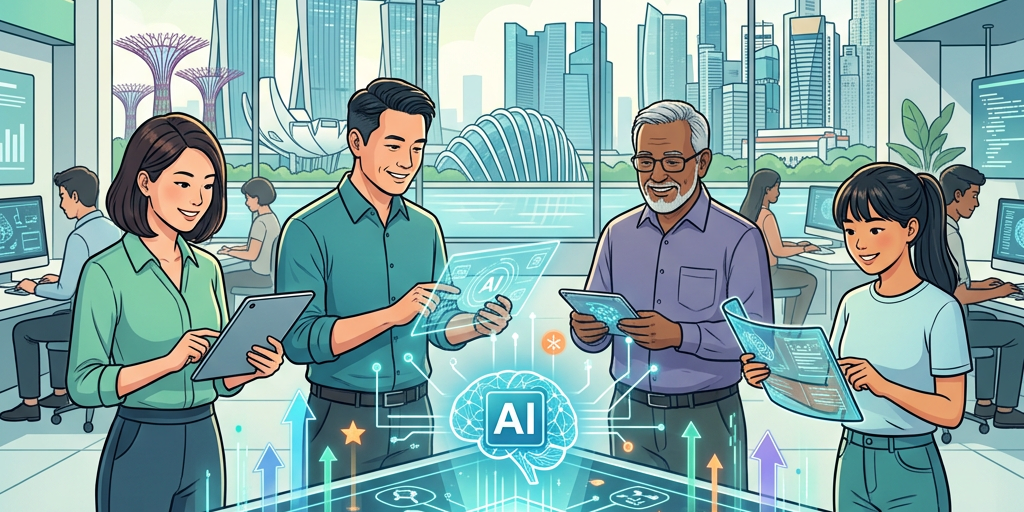
AI-Powered Reskilling and Upskilling Initiatives in Singapore: Empowering the Workforce for the Future
As the landscape of work evolves, due to advancements in technology, the need for adaptable skills becomes more crucial than ever. In Singapore, the government has recognized the importance of this shift and has taken substantial steps to enhance the capabilities of its workforce through targeted initiatives. Specifically, the focus on AI reskilling Singapore aims to equip employees with essential skills that match the demands of a rapidly changing job market. This commitment not only positions individuals for success but also strengthens the entire economy by fostering a workforce that can thrive in an AI-driven environment.
In this article, we will explore the implications of AI in the workforce context, the government’s initiatives for reskilling and upskilling, the unique challenges that may arise, and the future outlook for workers in Singapore. Through these discussions, it becomes evident how Singapore is setting a precedent in global workforce development, ensuring that its citizens remain competitive and innovative.
Table of Contents
The Impact of AI on the Workforce
The advent of Artificial Intelligence (AI) technologies has revolutionized industries by enhancing efficiency and driving innovation. In Singapore, sectors ranging from finance to healthcare have adopted AI to improve operational efficiencies and customer engagement. However, this rise of AI has also led to significant changes in workforce dynamics. Job roles are evolving, and many traditional jobs are being replaced by automated processes, leading to a pressing need for AI reskilling in Singapore. Employees are now expected to adapt to new roles that require advanced digital skills, including data analytics, machine learning, and AI integration.
AI’s impact on employment is multifaceted. While some roles may become obsolete, new job opportunities are also created, particularly in tech-focused and emerging sectors. This duality presents a challenge and an opportunity: workers need to pivot quickly to take advantage of new roles emerging from technological advancements. As a result, businesses and government entities must work collaboratively to ensure that individuals have access to the training necessary to thrive. The impact of AI, therefore, extends beyond just job displacement; it calls for a paradigm shift in how skills are perceived and developed throughout a person’s career.
Furthermore, the pandemic has accelerated the digital transformation, emphasizing the necessity for continuous learning and adaptability. Employers are now looking for agile workers who can not only perform tasks but also innovate and evolve as technologies change. This underscores the critical importance of reskilling and upskilling initiatives, which focus on shifting mindsets and developing lifelong learning habits among the workforce. Ultimately, the goal is to create a resilient workforce that can meet the demands of the digital economy effectively.
Government Initiatives for AI Skills Development
Recognizing the urgency of equipping its citizens with AI skills, the Singaporean government has implemented various initiatives aimed at fostering an AI-competent workforce. Through the SkillsFuture program, launched in 2014, Singapore emphasizes lifelong learning, providing citizens with resources and financial support to pursue qualifications and training in various fields, including AI. This initiative is pivotal in supporting the reskilling of workers, ensuring they remain relevant in the face of technological change.
Among the notable programs is the AI Singapore initiative, which aims to upskill locals through various training schemes and projects that leverage AI technologies. This encompassing strategy offers workshops, online courses, and mentorships designed to enhance the technical skills of employees. Furthermore, Industry Transformation Maps (ITMs) are established by the government to outline specific pathways for different sectors, providing a clear framework for how industry leaders, educational institutions, and workers can collaborate to foster AI capabilities.
The collaboration between the public sector and private companies has also been instrumental in developing training programs that reflect real-world industry needs. Companies are encouraged to invest in their employees through subsidized training programs and partnerships with educational institutions. This alignment ensures that training is closely connected to market demands, making the workforce more agile and prepared for future challenges.
| AI Skills Development Programs | Description | Target Audience |
|---|---|---|
| SkillsFuture for Digital Workplace | An initiative to equip Singaporeans with basic digital skills, particularly in AI applications. | All citizens, especially older workers. |
| AI Singapore | Offers workshops and training for AI proficiency, aimed at building a strong local talent pool. | Data scientists, analysts, and those interested in AI. |
| TechSkills Accelerator (TeSA) | A program that focuses on building tech and AI skills through industry partnerships. | Technology workers and professionals. |
| Workplace Learning | A framework encouraging companies to offer training in AI as part of employee development. | Employers and their employees. |
Challenges in Implementation
While Singapore’s initiatives for AI reskilling and upskilling are commendable, several challenges hinder effective implementation. One major concern is ensuring that the training provided is aligned with the rapidly changing technological landscape. The pace of innovation in AI often outstrips the rate at which educational programs can update their curricula, potentially leaving workers with skills that may soon become obsolete.
Moreover, accessibility to training programs can be a barrier for some demographics, particularly older workers who may not have the foundational digital skills necessary to embark on more advanced AI training. There is a risk that this age group could be left behind if alternative pathways or additional support structures are not made available to them. Hence, bringing these individuals up to speed requires specialized programs tailored for different learning paces and styles.
Another challenge is the need for an adaptable workforce where individuals are not only willing to learn but are also motivated to engage in continuous skill development. Without a culture of lifelong learning ingrained in Singapore’s workforce, the ambitious goals of the government’s initiatives could fall short. Therefore, stimulating interest and fostering a growth mindset among employees must be a priority for successful reskilling initiatives.
Finally, the efficacy of these training programs must be continually assessed and refined based on their outcomes. Establishing key performance indicators and gathering feedback from participants can help ensure that the programs meet the intended objectives and effectively contribute to building a workforce equipped for the AI era.
The Future Outlook for AI and Workforce Skills
The future outlook for AI and workforce skills in Singapore appears promising, driven by a collective commitment from both the government and businesses to foster a culture of continuous learning. As more organizations adopt AI technologies, the demand for skilled professionals who can effectively implement and manage these systems will continue to grow. This trend will likely usher in a new era of employment opportunities that require advanced skills and greater adaptability.
Moreover, as Singapore positions itself as a global tech hub, the integration of AI skills into various industries will elevate the country’s competitiveness on the world stage. Workers who engage in lifelong learning are expected to leverage their AI skills across multiple sectors, leading to enhanced career mobility and job satisfaction. The investment in education, skills training, and workforce development will yield not only economic benefits but also a resilient community capable of navigating future challenges.
In conclusion, the future of work in Singapore will largely be defined by how well the workforce can adapt to technological advancements. The government’s dedication to fostering AI skills through various reskilling and upskilling programs highlights the proactive measures being taken to secure the nation’s economic future. Engagement, adaptability, and continuous learning will be the cornerstones of workforce development moving forward.
Overall, Singapore is setting an example for other nations, emphasizing the importance of preparing the workforce for an AI-driven future—a necessary step in today’s evolving job market.
FAQs
1. What is AI reskilling?
AI reskilling refers to training workers to acquire new skills in artificial intelligence, enabling them to transition to new roles as technology evolves.
2. How is the Singapore government supporting AI reskilling?
The government supports AI reskilling through programs like SkillsFuture and AI Singapore, offering financial aid, workshops, and partnerships with educational institutions.
3. Who can benefit from AI reskilling programs in Singapore?
All Singaporeans can benefit, especially those in industries undergoing digital transformation or job displacement due to AI.
4. What challenges exist in AI skills development?
Challenges include keeping training relevant, ensuring accessibility for older workers, and fostering a culture of lifelong learning.
5. What is the future of AI in the Singapore workforce?
The future looks bright, with a significant emphasis on lifelong learning to ensure the workforce remains competitive and prepared for AI-driven changes.