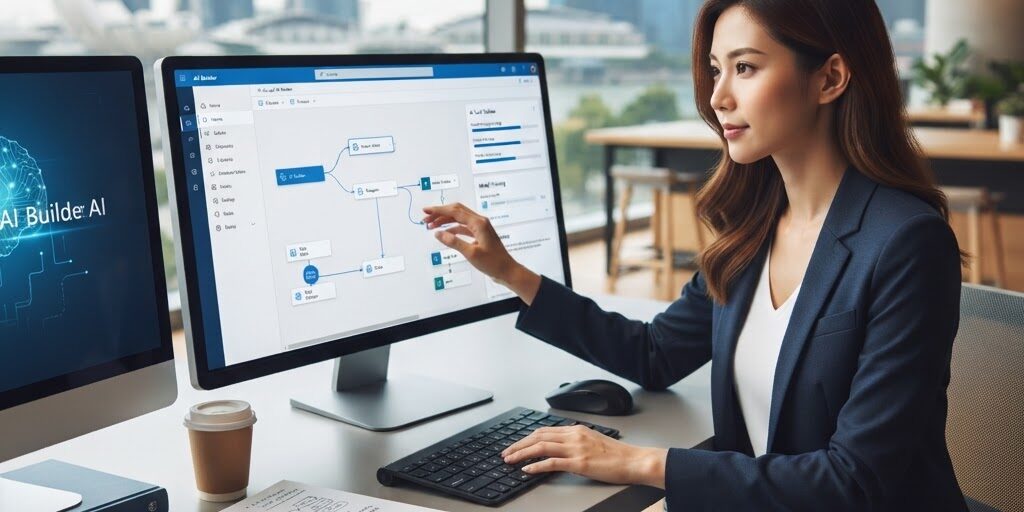
How to Master AI Builder Skills: A Guide for Singapore Professionals
In the rapidly evolving digital landscape of Singapore, the workforce is shifting toward a future where intelligent automation is no longer a luxury but a fundamental necessity. As organizations accelerate their digital transformation journeys, the demand for professionals equipped with AI builder skills has reached an all-time high. These skills represent the unique ability to design, develop, and implement artificial intelligence solutions that align with strategic business goals rather than just following theoretical frameworks. As industry experts emphasize, closing the widening skills gap is essential for Singapore to maintain its status as a leading global hub for innovation. By focusing on practical application, problem-solving, and technical proficiency, professionals can position themselves at the forefront of the technological revolution. This comprehensive guide explores the essential competencies required to navigate this changing environment, providing a roadmap for those eager to lead in the age of intelligent systems. Understanding the nuances of AI architecture, data management, and ethical deployment is critical for anyone looking to build robust solutions that drive enterprise value and ensure sustainable growth in a competitive global market.
Table of Contents
Building the Fundamental AI Skill Set
To truly master AI builder skills, one must start with a solid foundation that bridges the gap between basic data literacy and advanced machine learning architecture. Professionals in Singapore are increasingly finding that simple knowledge of coding is insufficient; instead, there is a requirement to understand the logic behind neural networks, data structures, and the mathematical principles that govern predictive modeling. A builder is someone who looks at a business problem and envisions a technical pathway to solve it through automation or intelligent prediction. This journey begins with mastering programming languages like Python or R, which serve as the scaffolding for most AI development tasks. Beyond language mastery, understanding data ethics and governance is paramount. Because Singapore operates under stringent regulatory frameworks, builders must learn how to design systems that are not only effective but also compliant with local data privacy standards. This involves mastering techniques for feature engineering, model validation, and iterative testing. Many industry experts argue that the most successful builders are those who cultivate a mindset of lifelong learning. They do not just memorize syntax; they understand the lifecycle of an AI project from data collection and cleaning to model deployment and monitoring. By engaging with open-source projects or participating in local technology community initiatives, individuals can gain the practical experience needed to build resilient AI pipelines. Developing a deep curiosity about how large language models function alongside more traditional predictive analytics will differentiate a competent builder from an average user. It is about connecting the dots between raw data and meaningful business outcomes, ensuring that every line of code serves a specific, documented, and valuable purpose within the enterprise architecture while maintaining a focus on performance optimization at every single stage of the development cycle.
Essential Tools and Frameworks for AI Builders
Mastering AI builder skills requires proficiency with an evolving set of industry-standard tools and frameworks that streamline development and deployment. In the Singaporean enterprise context, organizations often prefer scalable solutions that integrate well with existing cloud environments such as Azure, AWS, or Google Cloud. Builders must be comfortable working with libraries like TensorFlow and PyTorch, as these remain the industry standards for developing deep learning models. Additionally, mastering containerization tools like Docker and orchestration platforms like Kubernetes is critical for ensuring that AI applications remain portable and scalable across diverse environments. The ability to manage MLOps is equally important; this discipline focuses on the maintenance and lifecycle management of machine learning models in production, ensuring they continue to perform accurately as new data becomes available. Our team often highlights that builders must also understand the role of API management and microservices, which allow AI models to communicate effectively with other business applications. The following table provides a breakdown of essential categories that a professional should focus on to build a comprehensive toolkit for AI development.
| Tool Category | Primary Purpose | Industry Importance |
|---|---|---|
| Development Frameworks | Neural Network Design | High |
| Cloud Services | Scalable Deployment | Critical |
| Data Processing | Feature Engineering | High |
| Monitoring Tools | Performance Tracking | Medium |
Beyond these technical stacks, builders should also familiarize themselves with low-code and no-code AI platforms which are becoming increasingly prevalent in internal business optimization. While deep technical expertise is the goal, understanding these tools allows a professional to prototype solutions quickly and gather stakeholder feedback before committing significant resources to custom-coded development. This hybrid approach to building is what defines the modern Singaporean tech professional. It is about balancing heavy technical debt with the speed of delivery. As the ecosystem grows, the selection of the right tool for the right task becomes a mark of a skilled builder. You must constantly evaluate new frameworks for their efficiency, security, and integration capabilities to ensure that your build is not just functional but also future-proofed against the inevitable shifts in technological standards and infrastructure requirements that define our current era of rapid, continuous digital acceleration and corporate transformation.
Strategic Implementation in Enterprise Environments
Translating AI builder skills into business value is the ultimate test for any professional. Implementation is where the theoretical meets the practical, often presenting challenges related to organizational culture, change management, and existing technical debt. A successful builder understands that technical excellence is only half the battle; the other half is communicating the benefits of AI to non-technical stakeholders who prioritize risk mitigation and ROI. In Singapore, where enterprise environments are often complex and hierarchical, builders must adopt a consultative approach. This means mapping technical capabilities to specific business pain points such as manual process automation, customer sentiment analysis, or predictive supply chain management. When implementing a new AI solution, it is vital to create clear metrics for success from the very start. Is the objective to reduce time-to-market, minimize errors in data entry, or improve customer satisfaction scores? A builder who can answer these questions with quantitative data is far more valuable than one who merely focuses on the complexity of the algorithm itself. Furthermore, project management methodologies like Agile or Scrum are essential when building AI systems. AI development is iterative by nature; models rarely perform perfectly on their first iteration. Building a system involves constant cycles of training, testing, and refinement based on real-world data feedback loops. This requires builders to work closely with cross-functional teams, ensuring that the developers, data engineers, and business analysts are all aligned on the project vision. By fostering an environment of transparent communication and iterative improvement, the professional ensures that the AI solution is integrated seamlessly into daily operations, thus minimizing friction and maximizing the overall adoption rate of the technology across the entire organization, which is essential for long-term project success and lasting business transformation.
Future-Proofing Your Career in Singapore
As we look toward the future, the landscape of AI builder skills will continue to evolve, influenced by advancements in generative AI, agentic workflows, and edge computing. Singapore professionals must remain adaptable to maintain their competitive edge in an international job market. Future-proofing your career involves more than just keeping up with new coding libraries; it means cultivating a strategic understanding of how AI influences broader societal and economic trends. Industry experts note that the next generation of builders will likely focus on human-AI collaboration, where the builder is not just coding a model, but designing an entire ecosystem where humans and agents work in tandem. This requires a strong grasp of user experience design, as the interface between the AI and the human user is where the most significant value is often realized. Additionally, as privacy regulations become even more stringent, a deep focus on ethical AI, bias reduction, and explainability will become a defining skill for top-tier professionals. It is important to stay engaged with the local community, attend conferences, and participate in certifications that validate your expertise. By diversifying your skills and embracing the uncertainty of technological shifts, you can transform from a standard technical practitioner into a visionary builder who leads change rather than simply reacting to it. The path to becoming an expert builder is demanding, but the opportunities for those who master these skills are immense. As Singapore continues to invest heavily in smart nation initiatives, the demand for builders who can bridge the gap between imagination and implementation will only grow. By consistently honing your craft and staying committed to professional growth, you can secure a position as a leader in this dynamic and rewarding field, ensuring your career remains resilient throughout the next decade of technological advancement and global digital integration.
To conclude, mastering AI builder skills is a transformative journey that empowers Singaporean professionals to drive significant business outcomes in an increasingly digital economy. By focusing on a holistic approach that includes deep technical competence, strategic enterprise integration, and a forward-thinking mindset regarding ethics and scalability, you can successfully navigate the complexities of AI development. The demand for skilled builders who can bridge technical expertise with business objectives is higher than ever, and those who invest in their continuous learning will lead the future of industry innovation. Remember that the goal is not just to build AI, but to build effective, ethical, and value-driven solutions that improve how we live and work. Embrace the challenge, stay connected to the community, and continue pushing the boundaries of what is possible in the vibrant, tech-forward landscape of Singapore.
Frequently Asked Questions
What is the primary role of an AI builder in a business setting? An AI builder is responsible for designing, developing, and deploying AI solutions that directly address business problems and enhance operational efficiency.
Do I need a formal computer science degree to master AI builder skills? While degrees are beneficial, practical experience, certifications, and a portfolio of personal projects are often more important for demonstrating real-world competency.
How can I stay updated with the latest AI trends in Singapore? Engaging with local tech communities, following authoritative industry reports, and attending AI-focused workshops or conferences are excellent ways to remain current.
Are there specific regulations in Singapore that AI builders must follow? Yes, Singapore has established clear AI governance frameworks that emphasize transparency, fairness, and safety, which all builders should understand during development.
What are the most in-demand languages for AI builders? Python remains the most popular due to its extensive ecosystem of libraries, followed by SQL for data management and specialized languages used in cloud-native development.