Mastering Agentic AI: The 2026 Guide to Autonomous Workflows for Professionals
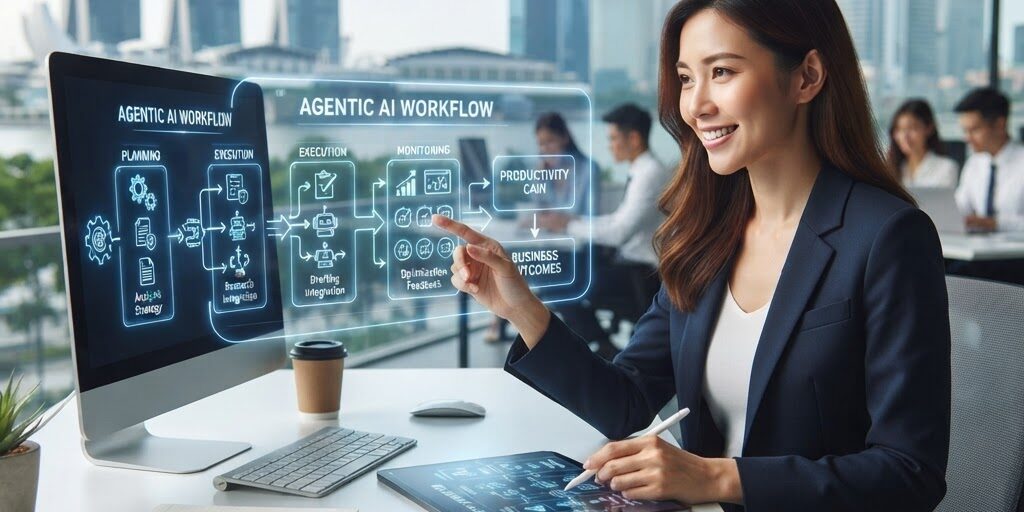
In the rapidly evolving landscape of 2026, the shift from basic chatbot interactions to sophisticated agentic AI workflows has become the defining frontier for modern professionals. Moving beyond simple prompts and text generation, agentic AI represents a new era where autonomous systems possess the cognitive capacity to plan, execute, and monitor complex multi-step tasks across diverse software environments. For forward-thinking professionals in Singapore and globally, mastering these autonomous systems is no longer a luxury but a fundamental necessity to maintain competitive relevance. These systems act as digital collaborators that can navigate files, manage communication streams, and reconcile data sets without constant human intervention. By integrating these advanced tools into daily operations, individuals can reclaim significant time, focusing instead on high-level strategic thinking rather than administrative maintenance. This guide provides an essential roadmap for navigating this transition, helping you understand how to implement and optimize agentic AI within your professional framework while ensuring efficiency and security remain at the forefront of your digital strategy.
Table of Contents
Understanding the Evolution of Agentic AI
The progression of artificial intelligence over the past few years has been nothing short of transformative. As we look at the state of technology in 2026, the focus has shifted from generative models that simply produce content to agentic AI workflows that drive tangible results. Unlike earlier versions of AI that required a human to trigger every single step of a process, modern agentic systems are designed with agency—the ability to perceive their environment, make decisions based on specific goals, and act on those decisions in real-time. Industry experts note that this transition is akin to moving from a library assistant who finds books to a project manager who executes an entire research project. These agents use sophisticated reasoning chains to break down abstract objectives into actionable tasks, effectively managing sub-goals and error correction cycles without needing a prompt for every action. This capability is particularly vital for professionals handling large-scale data analysis, supply chain management, or high-volume project coordination where human fatigue often leads to errors. By utilizing deep-learning architectures capable of self-reflection and multi-tool orchestration, these agents can interface with calendars, email clients, and professional databases concurrently. This ensures a seamless flow of information that would otherwise take hours of manual input. Understanding this evolution is the first step toward effective adoption. Professionals must shift their mindset from being a user of tools to becoming a director of autonomous systems. As these agents become more embedded in common software applications, the barrier to entry continues to lower, but the requirement for clear, goal-oriented instruction remains high. Mastering these systems demands a deep understanding of how to define success criteria for automated agents to ensure they remain aligned with professional objectives and ethical standards throughout their operation cycles.
Designing Robust Autonomous Workflows
Designing effective agentic AI workflows requires a fundamental shift in how professionals organize their daily work. When building a workflow that is meant to be handled autonomously, the clarity of the initial parameters is the single most important factor. Our team recommends beginning with small, clearly defined tasks before scaling up to complex, multi-day operations. When a professional defines a goal for an agent, they must break that goal down into modular phases. For instance, if the task involves preparing a report, the agent should first be tasked with data gathering, followed by synthesis, and finally formatting. During each phase, the agent should be programmed to provide a progress report that allows for human oversight at critical junctures. This is where the concept of a ‘human-in-the-loop’ becomes essential for maintaining high levels of accuracy and context. Furthermore, professionals must consider the technical architecture of their agentic systems. Using specialized platforms, one can create logic gates that govern how the AI handles unexpected data entries or software errors. For example, if an agent encounters a broken link or a missing document during an automated research task, the workflow should include a contingency sub-routine that flags the issue for human intervention rather than proceeding with incorrect data. This layered approach to building workflows protects the integrity of the work being produced. It is also helpful to utilize standardized templates for your agent instructions. By consistently providing agents with context, constraints, and defined output formats, professionals ensure that the AI remains predictable and reliable over long periods. The table below illustrates how traditional manual task management compares to modern agentic workflow management in terms of resource allocation and output efficiency across various professional sectors.
| Feature | Manual Workflow | Agentic Workflow |
|---|---|---|
| Task Planning | Human-led | AI-assisted |
| Execution Speed | Variable | High-velocity |
| Error Monitoring | Manual | Real-time automated |
| Scaling Capacity | Low | High |
Implementation Strategies for Professionals
The successful implementation of agentic AI workflows requires more than just access to the right software; it requires a structured strategy to integrate these tools into existing professional routines. Professionals should start by identifying the most repetitive and time-consuming tasks in their current roles. These are typically the ideal candidates for automation through agentic systems. By auditing your daily schedule, you can highlight processes that involve high amounts of data entry, routine communication, or repetitive information synthesis. Once these high-friction tasks are identified, the next step is selecting an appropriate AI platform that supports agentic capabilities and integrates well with your current tech stack. It is vital to prioritize tools that emphasize security and data privacy, especially when handling sensitive client information. Our team suggests conducting a pilot phase where the agent operates in a sandbox environment, performing tasks alongside you to ensure its decision-making aligns with your professional expectations. This monitoring period is critical for adjusting the agent’s behavior and refining its instructions to prevent common pitfalls such as hallucinations or out-of-scope actions. Furthermore, ongoing training is essential. As agentic technology evolves, the way we interact with these systems will also change. Staying informed about new capabilities, such as advanced tool usage or improved long-term memory, will allow you to continuously improve your workflows. Many professionals find that documenting their specific ‘agent prompts’—the detailed set of instructions given to the AI—creates a library of reusable assets that can be shared across teams. By standardizing these instructions, your entire organization can benefit from the increased productivity that autonomous systems provide. Remember, the goal of implementation is to create a symbiotic relationship where the AI handles the heavy lifting, allowing the human professional to focus on the creative and high-value tasks that require emotional intelligence and complex judgment.
The Future of AI Collaboration
As we project into the late 2020s, the relationship between humans and artificial intelligence is poised to become significantly more collaborative and integrated. We are moving toward a future where professional roles will be defined by their ability to orchestrate a team of specialized AI agents, each designed to excel at specific domains of knowledge or action. This shift will redefine what it means to be a professional, placing a higher premium on skills like systems thinking, ethical oversight, and the ability to articulate clear objectives. As agentic AI becomes more prevalent, the competitive advantage will go to those who can effectively manage these autonomous workflows to deliver superior results in less time. In the future, we anticipate that AI agents will possess better ‘contextual memory,’ meaning they will be able to remember previous interactions and build upon them over months or even years. This will enable agents to understand the nuance of a professional’s specific style and preferences, making their output feel more natural and aligned with individual needs. Additionally, as connectivity between platforms improves, agents will likely operate across multiple software ecosystems simultaneously, breaking down the silos that currently limit productivity. While the pace of change can seem daunting, embracing these tools today positions you at the forefront of the next industrial evolution. The key is to remain curious and adaptable. By learning how to guide and govern agentic AI, you are not just automating a task; you are learning to manage the most powerful set of tools ever created for professional productivity. Whether you work in law, finance, engineering, or creative design, the ability to effectively deploy agentic systems will likely become the standard metric for professional success. The future belongs to those who view AI not as a replacement, but as an essential partner in their career journey.
Conclusion
Mastering agentic AI workflows is a transformative investment for any professional in 2026. By shifting from manual execution to managing autonomous systems, you empower yourself to achieve unprecedented levels of productivity and focus. As explored throughout this guide, the path to success involves understanding the core principles of agency, designing robust modular workflows, implementing strategic integration plans, and embracing the future of human-AI collaboration. While technology will continue to advance, your ability to provide clear direction, ethical oversight, and human-centric goals will ensure these tools remain effective assets. Start small, refine your processes, and stay committed to continuous learning. By doing so, you will not only stay relevant in a changing market but also lead the way in redefining professional efficiency and innovation within your chosen industry.
Frequently Asked Questions
What exactly defines an agentic AI workflow?
An agentic AI workflow is a process where an AI system can autonomously plan, execute, and monitor a multi-step task to achieve a specific goal without constant human intervention.
How do I start building my first autonomous workflow?
Begin by identifying a repetitive, high-volume task. Break the process into clear, modular steps, and provide the AI with specific instructions for each phase to ensure accuracy.
Are agentic AI tools secure for professional use?
Security depends on the platform you choose. Always select tools with robust encryption and privacy policies, and avoid feeding highly sensitive, unencrypted data into public-facing models.
What is the biggest challenge in adopting agentic AI?
The primary challenge is learning to write precise, goal-oriented instructions. Effective delegation to AI requires clear constraints, defined success metrics, and a thorough understanding of the task.
Will agentic AI replace human professionals?
No, it acts as a partner. It handles routine, data-intensive work, allowing humans to focus on complex, creative, and strategic tasks that require empathy and nuanced human judgment.